

A toilet that clogs once may be an inconvenience, but when your toilet keeps clogging, it can signal a larger plumbing issue. Repeated backups waste water, interrupt daily routines, and may eventually cause unsanitary overflow damage. Homeowners and property managers across Los Angeles, Orange County, Long Beach, and surrounding Southern California communities often deal with recurring toilet clogs caused by excess paper, aging fixtures, mineral buildup, sewer-line roots, or drain problems farther down the system. The good news is that many clogs are preventable—and knowing the warning signs can help you avoid a costly emergency. Below, A-1 Performance Rooter and Plumbing explains seven common reasons toilets clog repeatedly, safe first steps to take, and when professional plumbing service is the right solution.
Why Does My Toilet Keep Clogging? Start With the Flush
A toilet works by sending a fast, forceful volume of water through the bowl’s trapway and into the drain line. When that water flow is weak or the drain path is restricted, waste and toilet paper may not clear completely. The material can remain in the trap or pipe, catch more debris over time, and create a recurring blockage.
Quick answer: If your toilet keeps clogging, the most likely causes are too much or non-flushable material, a partial blockage, weak flushing performance, a venting issue, a clogged drain line, or a sewer-line obstruction. A clog affecting more than one fixture requires prompt professional attention.
1. Too Much Toilet Paper or Non-Flushable Items
The most common cause of a clogged toilet is flushing more material than the toilet and drain system can handle. Even modern toilets can struggle when large wads of thick paper go down at once. Older low-flow toilets, common in some established neighborhoods of Los Angeles and Long Beach, may have especially limited flushing force.
Only human waste and a reasonable amount of toilet paper belong in the toilet. Items marketed as “flushable” can still create serious drain cleaning problems because they do not break apart as quickly as toilet paper.
- Flush paper in smaller amounts when needed.
- Keep a covered trash bin in every bathroom.
- Never flush wipes, paper towels, facial tissues, cotton swabs, floss, sanitary products, diapers, or cat litter.
- Teach children that toys and small objects do not belong in the toilet.
If a foreign object is lodged in the toilet’s internal trap, plunging may not remove it. A plumber can use a closet auger designed to clear the bowl without scratching porcelain or pushing the object deeper.
2. A Partial Toilet Trap or Drain Blockage
A partial clog is one of the main reasons a toilet seems to work sometimes but backs up again days later. Water may drain slowly, the bowl level may rise higher than usual before dropping, or the toilet may require multiple flushes. Material trapped in the toilet’s curved passageway can collect additional waste until it becomes a complete obstruction.
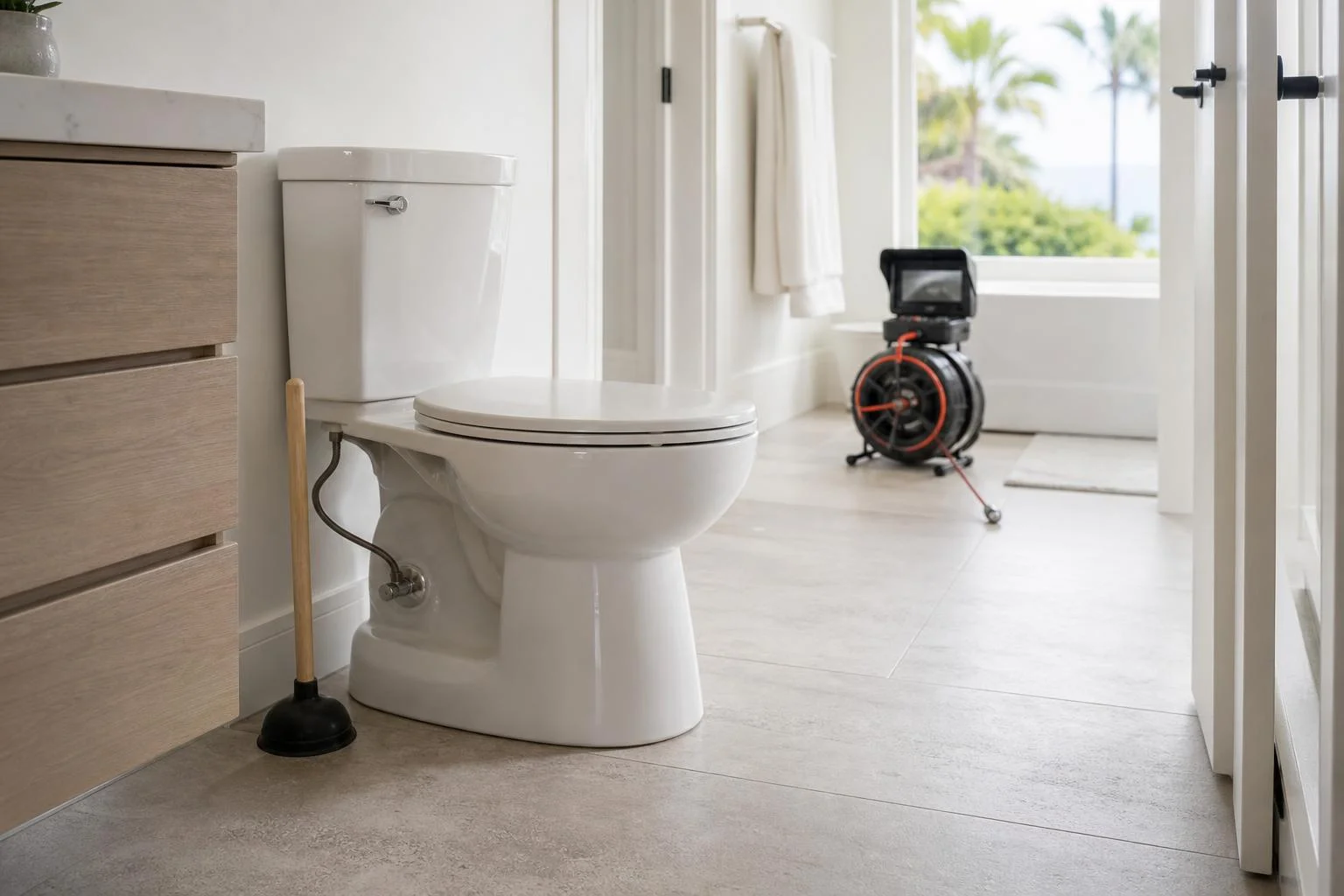
Use a flange-style toilet plunger rather than a flat sink plunger. Create a tight seal over the drain opening and use controlled, firm strokes for 15 to 20 seconds. Avoid repeatedly flushing a bowl that is already full; doing so can cause an overflow.
If plunging does not solve the issue after a few careful attempts, stop using chemical drain cleaners. Caustic products can damage older pipes, harm seals, and create a safety hazard for anyone who later services the line. Professional drain cleaning is safer and more effective for a persistent blockage.
3. Weak Flush Performance and Mineral Buildup
Southern California’s hard water can leave mineral deposits in toilet rim holes and siphon jets. Over time, these deposits restrict the water that enters the bowl during a flush, reducing the siphoning action needed to clear waste. The toilet may look clean but still flush weakly.
How to check for a weak toilet flush
- Remove the tank lid and confirm the water level reaches the fill line, typically about one inch below the top of the overflow tube.
- Flush and observe whether water flows evenly from around the rim.
- Look for sluggish swirling, incomplete clearing, or a refill that seems unusually slow.
- Check whether the flapper opens fully and stays open long enough to release adequate tank water.
Cleaning mineral buildup from accessible rim jets and adjusting a fill valve may improve performance. However, cracked components, worn flappers, or an outdated toilet may need repair or replacement. A water-efficient modern toilet can reduce water use while providing stronger, more reliable flushing when correctly installed.
4. A Plumbing Vent Problem Causing Slow Drains
Your plumbing system uses vent pipes to balance air pressure and allow wastewater to move freely. When a vent is blocked by leaves, nests, debris, or damage, toilets and other fixtures may drain poorly. You may hear gurgling from the toilet, sink, or shower, notice sewer-like odors, or see water levels change in nearby drains.
Vent issues are not a DIY project for most property owners because vents often terminate on the roof and may be connected to broader drainage problems. A licensed plumbing professional can diagnose whether the problem is a blocked vent, a partial drain obstruction, or another issue affecting airflow.
5. Main Sewer Line Clogs and Tree Root Intrusion
If your toilet keeps clogging and other drains are slow too, the problem may be in the main sewer line rather than the toilet itself. Common warning signs include water backing up into a shower or tub when the toilet flushes, gurgling fixtures, sewage odors, and repeated clogs in multiple bathrooms.
Tree root intrusion is a frequent concern in Southern California. Mature trees in older areas of Pasadena, Long Beach, Los Angeles, and Orange County can send fine roots toward tiny gaps in aging sewer pipes. Once roots find moisture inside a line, they grow and trap paper, grease, and debris. Cracked clay pipes, deteriorated cast iron, and misaligned pipe joints can also allow soil or roots into the system.
A professional sewer camera inspection identifies the exact location and condition of the obstruction. Depending on the findings, A-1 Performance Rooter and Plumbing may recommend:
- Rooter service to cut through intrusive roots and clear the line.
- Hydro jetting to remove heavy buildup from suitable pipes.
- Targeted pipe repair for cracks, breaks, or offset joints.
- Preventive maintenance for properties with recurring root growth.
6. An Older or Low-Quality Toilet May Be the Problem
Some toilets simply do not have enough flushing power for the household’s needs. Early-generation low-flow models can be prone to repeat clogs, particularly when they have worn internal parts or narrow trapways. A toilet with an internal crack, rough trap surface, or chronic obstruction may continue to clog even after the drain line is cleared.
If you have frequent blockages in only one toilet while every other fixture works normally, ask a plumber to inspect the fixture before assuming the main sewer is at fault. Replacing an unreliable toilet can be a practical long-term solution for busy homes, rental properties, restaurants, and other commercial restrooms.
7. Drain Line Damage, Grease, or Improper Pipe Slope
Recurring clogs can also result from hidden drain-line defects. Grease and food residue flushed from kitchen plumbing can accumulate in shared lines, while soap residue, hair, and scale narrow bathroom drains. In older Southern California buildings, sagging pipes, poor slope, corrosion, or previous installation errors can prevent waste from flowing properly.
These issues often cannot be confirmed with a plunger alone. Video camera inspection allows a plumber to see inside the pipe and distinguish between a simple clog, roots, grease buildup, a collapsed section, or a pipe that needs repair. Accurate diagnosis helps prevent unnecessary work and addresses the true cause of repeated backups.
When to Call a Plumber for a Clogged Toilet
Call a professional plumber promptly when a toilet overflows, clogs repeatedly after plunging, or causes backups in other drains. Do not wait for a full sewer backup if you notice warning signs. Fast service can help protect flooring, drywall, and personal property from contaminated water damage.
Call A-1 Performance Rooter and Plumbing if you notice:
- Multiple toilets, sinks, tubs, or showers draining slowly.
- Gurgling sounds or sewer odors from drains.
- Water backing up into a tub or shower after flushing.
- A toilet that needs frequent plunging.
- Recurring clogs after removing visible debris.
- Signs of a sewer-line leak, including damp areas or unusually green patches outdoors.
For a single, minor clog, shut off the toilet’s water supply valve if the bowl is rising, wait for the water level to fall, and try a proper flange plunger. For repeat issues, avoid chemical cleaners and schedule professional drain cleaning or camera inspection.
Prevent Future Toilet Clogs With Routine Plumbing Care
Preventive habits make a meaningful difference. Use only toilet paper, flush in manageable amounts, and address weak flushing before it becomes a blockage. For homes with mature landscaping, aging pipes, or a history of root intrusion, periodic sewer maintenance can help keep the main line clear.
In commercial properties, clear restroom signage and regular plumbing inspections are especially important. High restroom traffic can turn a small drainage issue into a business disruption quickly. A planned maintenance approach helps reduce emergency calls and protects customers, employees, and the property.
If your toilet keeps clogging, do not settle for repeated plunging and temporary fixes. A-1 Performance Rooter and Plumbing provides expert rooter service, sewer camera inspections, drain cleaning, pipe repair, and toilet plumbing solutions throughout Los Angeles, Orange County, Long Beach, and Southern California. Our experienced team can identify what is causing the blockage and recommend the right repair—not just a short-term workaround. Contact A-1 Performance Rooter and Plumbing today to schedule reliable service and get your bathroom plumbing flowing normally again.