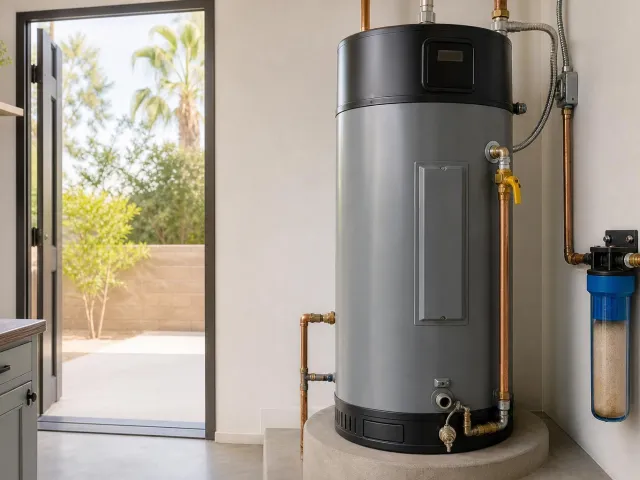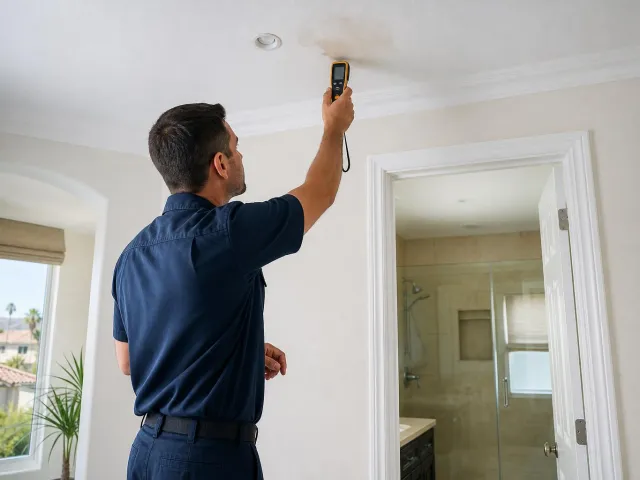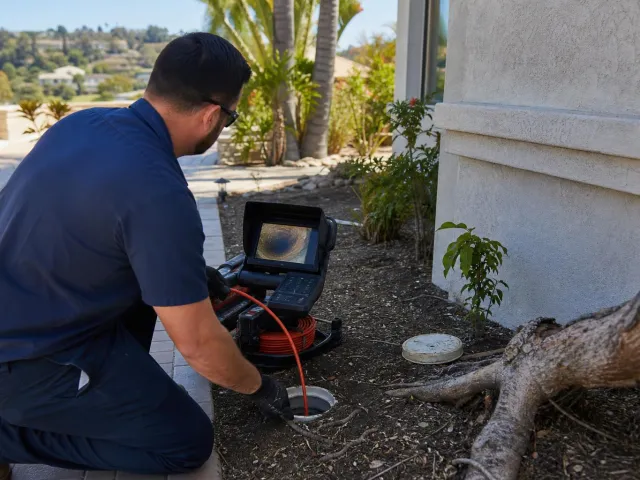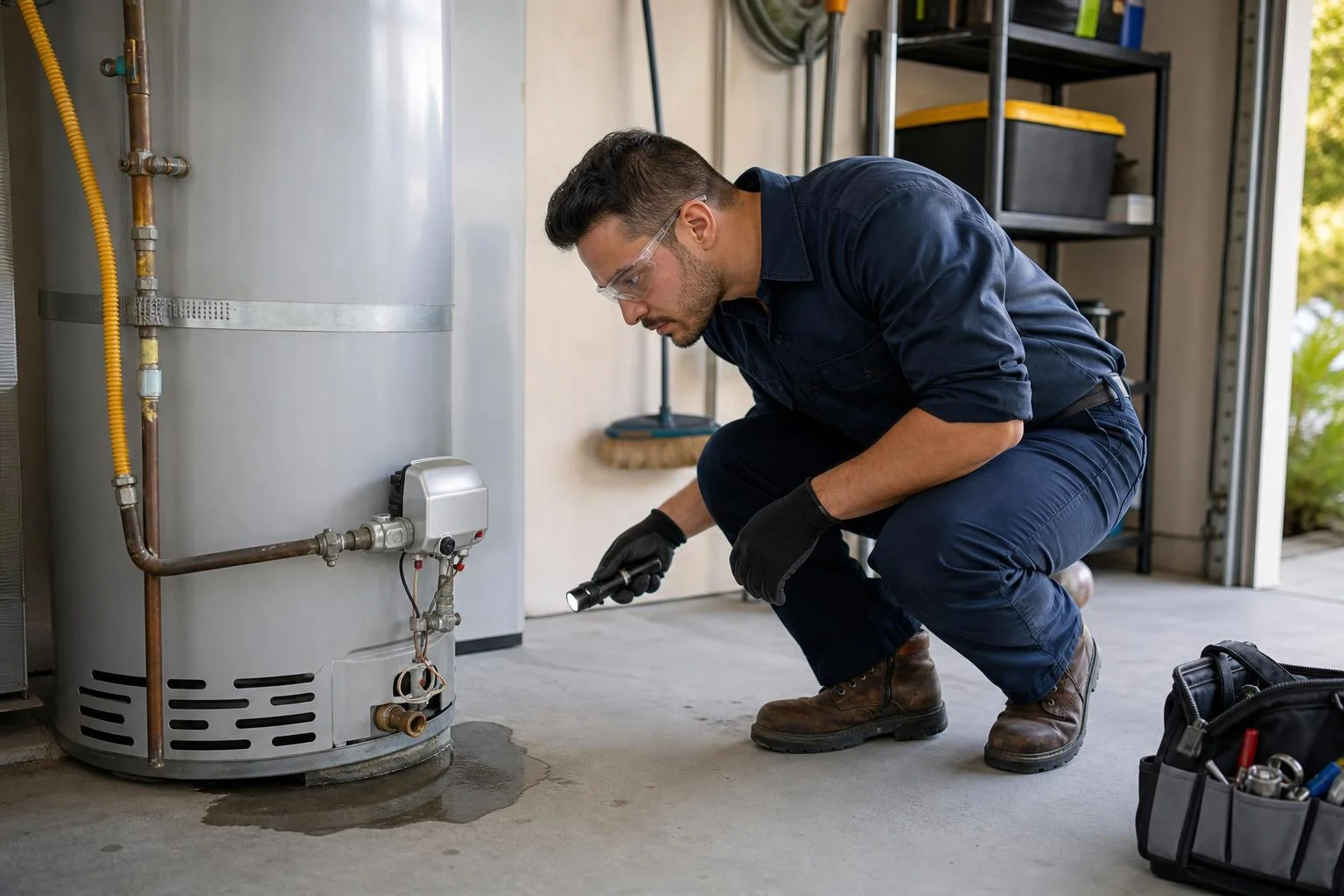


A water heater leaking from bottom is never a problem to ignore. Even a slow puddle can signal a failing drain valve, a leaking temperature-and-pressure relief valve, condensation, or corrosion inside the tank. Left alone, the leak can damage flooring, drywall, and nearby belongings—and a ruptured tank can release dozens of gallons in minutes. For homeowners and businesses across Los Angeles, Orange County, Long Beach, and surrounding Southern California communities, quick action can limit water damage and prevent an unsafe situation. This guide explains what to do immediately, how to identify the likely source, and when to call the licensed plumbing professionals at A-1 Performance Rooter and Plumbing.
Water Heater Leaking From Bottom: Immediate Steps to Take
If water is actively pooling beneath your water heater, take these steps in order:
- Protect people and property. Keep children, pets, and valuables away from the area. If water is near an electrical outlet, appliance cord, or breaker panel, do not step into it or touch electrical components.
- Turn off the water supply. Locate the cold-water shutoff valve above the water heater and turn it clockwise. If that valve is stuck or unavailable, shut off the home’s main water supply.
- Turn off the power source. For an electric water heater, switch off the dedicated circuit breaker. For a gas unit, turn the gas control knob to the “off” position. If you smell gas, do not operate switches, use flames, or attempt repairs; leave the area and contact the gas utility or emergency services.
- Document the leak. Take photos or video before moving anything. This can help a plumber diagnose the issue and may be useful for insurance documentation.
- Call a professional plumber. A-1 Performance Rooter and Plumbing can identify the source and recommend a safe, cost-effective repair or replacement.
Do not attempt to drain a hot tank, remove valves, or disassemble gas connections yourself. Water inside a tank can be extremely hot, and improper handling can cause burns, flooding, or damage to the unit.
Why Is My Water Heater Leaking at the Bottom?
A bottom leak does not always mean the tank itself has failed. Water can travel down pipes, fittings, or the outer jacket before it becomes visible on the floor. A plumbing inspection is the most reliable way to locate the exact source.
1. Leaking drain valve
The drain valve is located near the bottom of the tank and is used for flushing sediment. It may drip because it is loose, worn, damaged, or not fully closed after maintenance. This is often repairable by tightening or replacing the valve, but it should be handled carefully—especially if the valve is corroded or the tank is under pressure.
2. Temperature-and-pressure relief valve discharge
The temperature-and-pressure relief (T&P) valve is a critical safety component. It releases water when pressure or temperature inside the tank becomes too high. If water is coming from a pipe that runs down the side of the unit and ends near the floor, the T&P valve may be discharging.
Common causes include:
- Excessive water pressure in the plumbing system
- A malfunctioning T&P valve
- Overheating caused by a thermostat or heating-control problem
- A missing or failed expansion tank on a closed plumbing system
Never cap, plug, or block the T&P discharge pipe. Doing so removes an essential safety outlet and can create a dangerous pressure buildup.
3. Condensation or a nearby plumbing leak
In some cases, the “leak” is condensation forming on the outside of a cold tank, especially in a garage, utility room, or other humid space. A nearby pipe, water softener, HVAC condensate line, or overhead plumbing connection could also be dripping onto the water heater. In coastal areas of Orange County and Long Beach, seasonal humidity can make condensation more noticeable, but persistent pooling still deserves a professional evaluation.
4. Internal tank corrosion
If water is seeping from beneath the metal tank body—not from a fitting, valve, or discharge line—the inner tank may be corroded. Most conventional tank water heaters have a glass-lined steel tank and a sacrificial anode rod designed to slow corrosion. Over time, sediment and mineral deposits can reduce efficiency and contribute to deterioration.
Once the tank lining fails, water heater leaking from bottom issues generally cannot be repaired permanently. Replacement is usually the safest solution. The U.S. Department of Energy notes that conventional storage water heaters commonly last about 10 to 15 years, though water quality, maintenance, usage, and installation conditions can affect service life.
How to Tell Whether You Need Water Heater Repair or Replacement
A qualified plumber can inspect the unit, test water pressure, check safety components, and rule out external leaks. In the meantime, these signs can help you understand the likely recommendation.
Water heater repair may be possible when:
- The leak comes from a drain valve, supply connection, or T&P valve.
- The tank is relatively new and otherwise operating efficiently.
- There is no rust-colored water, major corrosion, or visible tank damage.
- The issue is related to a replaceable thermostat, heating element, or pressure-control component.
Water heater replacement is often the better option when:
- Water is leaking directly from the tank seam or tank base.
- The unit is near or beyond its expected service life.
- Rust, corrosion, or recurring leaks are present.
- Hot water runs out quickly, recovery is slow, or energy bills are increasing.
- Repair costs approach a substantial portion of the cost of a new unit.
For homes in Los Angeles County and Orange County, selecting the right replacement also means considering household size, available fuel source, local code requirements, seismic strapping, venting, and efficiency goals. A-1 Performance Rooter and Plumbing can install standard tank units, high-efficiency water heaters, and options sized for residential or commercial demand.
Prevent Future Water Heater Leaks With Simple Maintenance
Not every failure can be prevented, but routine maintenance can help identify problems before a small drip becomes water damage. Southern California water often contains minerals that settle at the bottom of a tank. This sediment can reduce heating efficiency, create popping or rumbling noises, and contribute to premature wear.
Use this water heater maintenance checklist:
- Schedule an annual inspection of valves, connections, venting, and safety controls.
- Flush the tank periodically as recommended by the manufacturer and a plumbing professional to reduce sediment buildup.
- Test the T&P valve only when it is safe to do so and according to manufacturer guidance; have a plumber inspect it if it sticks or leaks.
- Check for moisture monthly around the base, supply lines, and drain pan.
- Install a drain pan and leak alarm where appropriate, especially when the water heater is located in an attic, closet, or interior utility area.
- Address high water pressure promptly. Consistently elevated pressure can strain appliances, pipes, valves, and fixtures throughout the property.
For commercial properties, restaurants, apartment buildings, and offices, preventive plumbing maintenance is especially valuable because a water heater failure can interrupt operations and affect tenants or customers.
Call Southern California’s Water Heater Leak Specialists
A leaking water heater can worsen quickly, but fast professional service can protect your property and restore dependable hot water. A-1 Performance Rooter and Plumbing serves homeowners and businesses throughout Southern California with responsive diagnostics, water heater repair, water heater installation, pipe repair, drain services, and general plumbing solutions. Our experienced team will locate the true source of the leak, explain your options clearly, and complete the work with lasting performance in mind.
If you have a water heater leaking from bottom, turn off the water and power when it is safe to do so, then contact A-1 Performance Rooter and Plumbing today. Whether you need an urgent repair in Long Beach, a new water heater in Los Angeles, or expert plumbing help in Orange County, we are ready to help protect your home or business.