

Wondering, “how long does a water heater last?” Most conventional tank water heaters serve a home for about 8 to 12 years, while properly maintained tankless units can often last 15 to 20 years or more. However, Southern California’s mineral-heavy water, frequent usage, and coastal conditions can affect that timeline. From Los Angeles and Long Beach to Orange County, homeowners often notice warning signs only after a leak, cold shower, or sudden increase in utility costs. Knowing your water heater’s age, condition, and maintenance history helps you plan ahead instead of facing an emergency replacement. This guide explains expected water heater lifespan, the factors that shorten it, and when to call A-1 Performance Rooter and Plumbing.
How Long Does a Water Heater Last? Expected Lifespan by Type
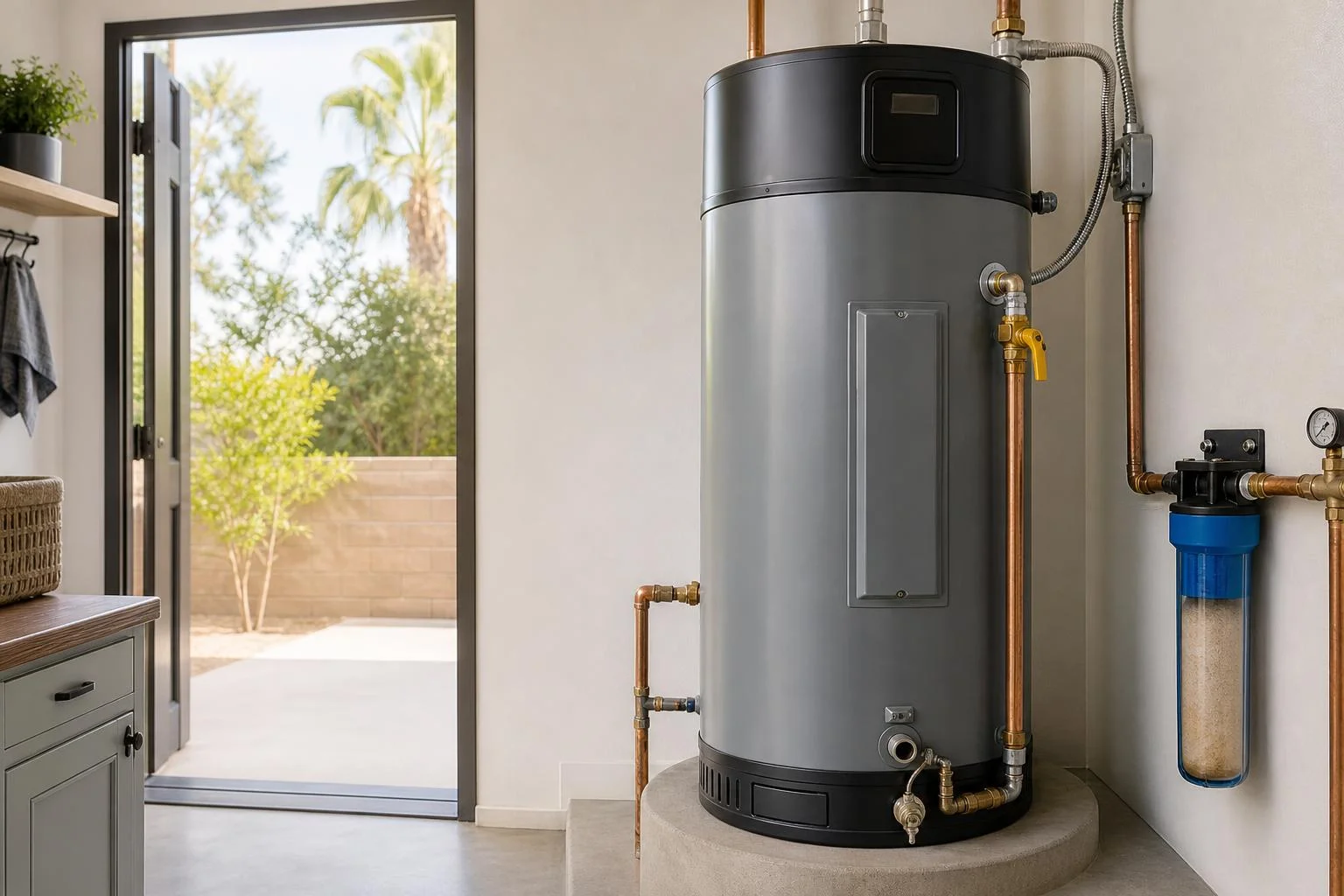
The answer depends primarily on the type of water heater, water quality, installation quality, and maintenance. A traditional storage-tank water heater holds and continually heats a supply of water, which means the tank and its components experience daily wear. Tankless systems heat water only when needed, so they do not have the same large tank corrosion risk.
- Gas or electric tank water heater: Usually 8 to 12 years.
- Tankless water heater: Often 15 to 20 years, especially when flushed regularly.
- Hybrid or heat pump water heater: Commonly 10 to 15 years, depending on maintenance and operating conditions.
- Commercial water heater: Lifespan varies widely because high demand, sizing, and maintenance schedules have a major impact.
Check the manufacturer’s label or serial number to determine the age of your unit. Many serial numbers include the production month and year, although the format varies by brand. If a tank-style unit is approaching 10 years old, it is smart to schedule a professional inspection—even if it still produces hot water. Water heating accounts for roughly 18% of a typical home’s energy use, according to the U.S. Department of Energy, so an aging, inefficient unit can cost more to operate before it completely fails.
Southern California Water Quality Can Shorten Water Heater Lifespan
Hard water is one of the biggest reasons water heaters wear out sooner in Southern California. Areas throughout Los Angeles County, Orange County, Riverside County, and Inland Empire communities often have water with dissolved minerals such as calcium and magnesium. As water heats, those minerals can settle at the bottom of a tank as sediment.
Over time, sediment creates a barrier between the burner or heating element and the water. Your system may need more energy to heat water, make rumbling or popping sounds, and experience uneven temperatures. The added heat stress can damage internal components and accelerate tank corrosion. In coastal areas such as Long Beach and parts of Orange County, salty air can also contribute to exterior corrosion around connections and venting components.
To help protect a water heater from local water conditions:
- Flush a tank water heater at least once a year; homes with very hard water may benefit from more frequent service.
- Have the anode rod inspected periodically. This sacrificial metal rod helps prevent internal tank corrosion.
- Consider a water softener or water conditioning solution if mineral buildup is recurring throughout the plumbing system.
- Keep the area around the unit dry, accessible, and free of stored items that could hide a small leak.
Professional water heater maintenance is particularly valuable for homeowners who have never flushed their tank or who recently moved into an older property. A plumber can assess sediment levels, test safety components, inspect connections, and recommend whether maintenance or replacement makes the most financial sense.
Signs You Need Water Heater Repair or Replacement
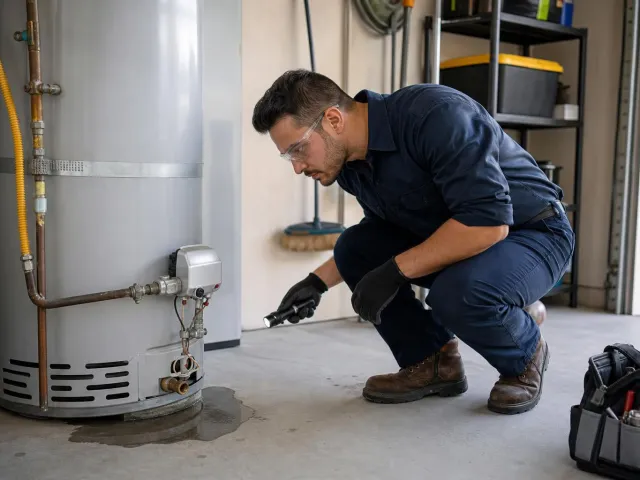
A water heater rarely fails without giving clues. Addressing those clues early may allow for a targeted water heater repair, but a corroded or leaking tank generally requires replacement. Do not ignore visible moisture around the base of the unit; small leaks can quickly damage flooring, drywall, and nearby belongings.
Common warning signs of an aging water heater
- Rust-colored hot water: This can indicate corrosion inside the tank or in aging pipes.
- Rumbling, banging, or popping: Sediment buildup may be overheating and shifting inside the tank.
- Water that is not hot enough: Possible causes include a failing heating element, burner issue, thermostat problem, or excessive sediment.
- Hot water runs out quickly: A damaged dip tube, undersized unit, or loss of usable tank capacity may be responsible.
- Water around the tank: Condensation is possible, but active leaking requires prompt professional attention.
- Higher utility bills: Declining efficiency can make an older water heater more expensive to operate.
If the unit is relatively new, repair may be worthwhile. Replacing a thermostat, pressure-relief valve, anode rod, heating element, or gas control can restore performance. But if a tank is rusting through, leaking from its body, or nearing the end of its expected service life, replacement is usually the safer long-term decision. A-1 Performance Rooter and Plumbing can inspect the system and provide clear recommendations without guesswork.
Extend Your Water Heater’s Life With Preventive Maintenance
The best way to get the most from a water heater is to prevent small issues from becoming expensive failures. Annual maintenance is especially important for busy households and commercial properties, where higher hot-water demand increases wear on equipment.
A practical water heater maintenance checklist
- Test the temperature-pressure relief valve: This critical safety device helps release excess pressure. A qualified plumber can test it safely and replace it if needed.
- Flush the tank: Removing sediment improves efficiency and reduces overheating at the bottom of the tank.
- Inspect the anode rod: Replacing a depleted rod can sometimes add years to a tank’s service life.
- Check for leaks and corrosion: Examine supply lines, shutoff valves, fittings, and the area below the unit.
- Set an efficient temperature: Around 120°F is commonly recommended for household use, helping reduce scalding risk and unnecessary energy use.
- Schedule tankless descaling: Tankless water heater maintenance removes scale from the heat exchanger and supports steady hot-water performance.
Never block combustion air, exhaust venting, or access panels on a gas water heater. Gas connections, venting problems, and pressure-relief valve concerns should be handled by a licensed plumbing professional. For businesses in Los Angeles, Long Beach, or Orange County, routine commercial plumbing maintenance can also reduce downtime and protect customers, tenants, and employees from a hot-water interruption.
Choosing a New Water Heater for Your Home or Business
When replacement is necessary, the right unit should be sized for the property’s hot-water needs—not simply matched to the old model. A household with multiple bathrooms, a large soaking tub, or simultaneous appliance use may need a higher-capacity tank or a properly sized tankless system. Restaurants, salons, multifamily properties, and other commercial facilities need an especially careful load calculation.
A conventional tank water heater can be a practical, cost-effective choice for many homes. A tankless water heater provides on-demand hot water, uses less space, and can offer a longer lifespan, but it may require gas-line, venting, electrical, or plumbing upgrades. An experienced plumber can review fuel type, household demand, available space, local code requirements, and long-term operating costs before installation.
If you are asking how long does a water heater last because your system is old or unreliable, do not wait for a burst tank to make a plan. A proactive replacement gives you more time to compare options and schedule work at your convenience.
Schedule Expert Water Heater Service in Southern California
Most tank water heaters last 8 to 12 years, while tankless models can often provide 15 to 20 years of service with appropriate maintenance. Hard water, sediment, corrosion, and neglected inspections can shorten those estimates, especially in Southern California homes and businesses. Watch for rusty water, unusual sounds, leaks, inconsistent temperatures, and rising energy costs, and arrange service before a minor concern becomes a major plumbing emergency. A-1 Performance Rooter and Plumbing provides dependable water heater repair, maintenance, and installation throughout Los Angeles, Long Beach, Orange County, and surrounding Southern California communities. Contact our experienced team today to schedule a water heater inspection or discuss the best replacement option for your property.