

Thanksgiving brings full sinks, busy garbage disposals, and a lot of opportunities for a preventable plumbing backup. The best Thanksgiving drain tips start with knowing that a garbage disposal is not a second trash can. Turkey drippings, potato peels, stuffing, coffee grounds, and other holiday leftovers can cling to pipe walls, harden in the line, or create dense clogs deep beyond the kitchen sink. For homeowners and restaurants across Los Angeles, Orange County, Long Beach, and surrounding Southern California communities, a little prevention can protect the celebration from an emergency plumbing call. Below, learn exactly what not to put down the drain this Thanksgiving, why these items cause trouble, and how to dispose of them safely.
Thanksgiving Drain Tips: The Quick “Do Not Put It Down” List
What should never go down a kitchen drain or garbage disposal on Thanksgiving? Keep fats, oils, grease, fibrous food scraps, starchy foods, coffee grounds, bones, and non-food items out of the sink. Even when an item seems small enough for the disposal, it may swell, bind together, or collect inside the drain line.
- Turkey grease, pan drippings, butter, gravy, and cooking oil
- Potato peels, celery, onion skins, corn husks, and other stringy scraps
- Rice, pasta, bread, stuffing, flour, and dough
- Coffee grounds and eggshells
- Turkey bones, fruit pits, and hard shells
- Paper towels, wipes, napkins, and food packaging
The U.S. Environmental Protection Agency identifies fats, oils, and grease—often called FOG—as a major contributor to sewer blockages and sanitary sewer overflows. Southern California kitchens are especially vulnerable during the holidays because heavy cooking loads can send more grease into already aging residential and commercial drain systems.
Fats, Oils, and Grease Create Stubborn Kitchen Drain Clogs
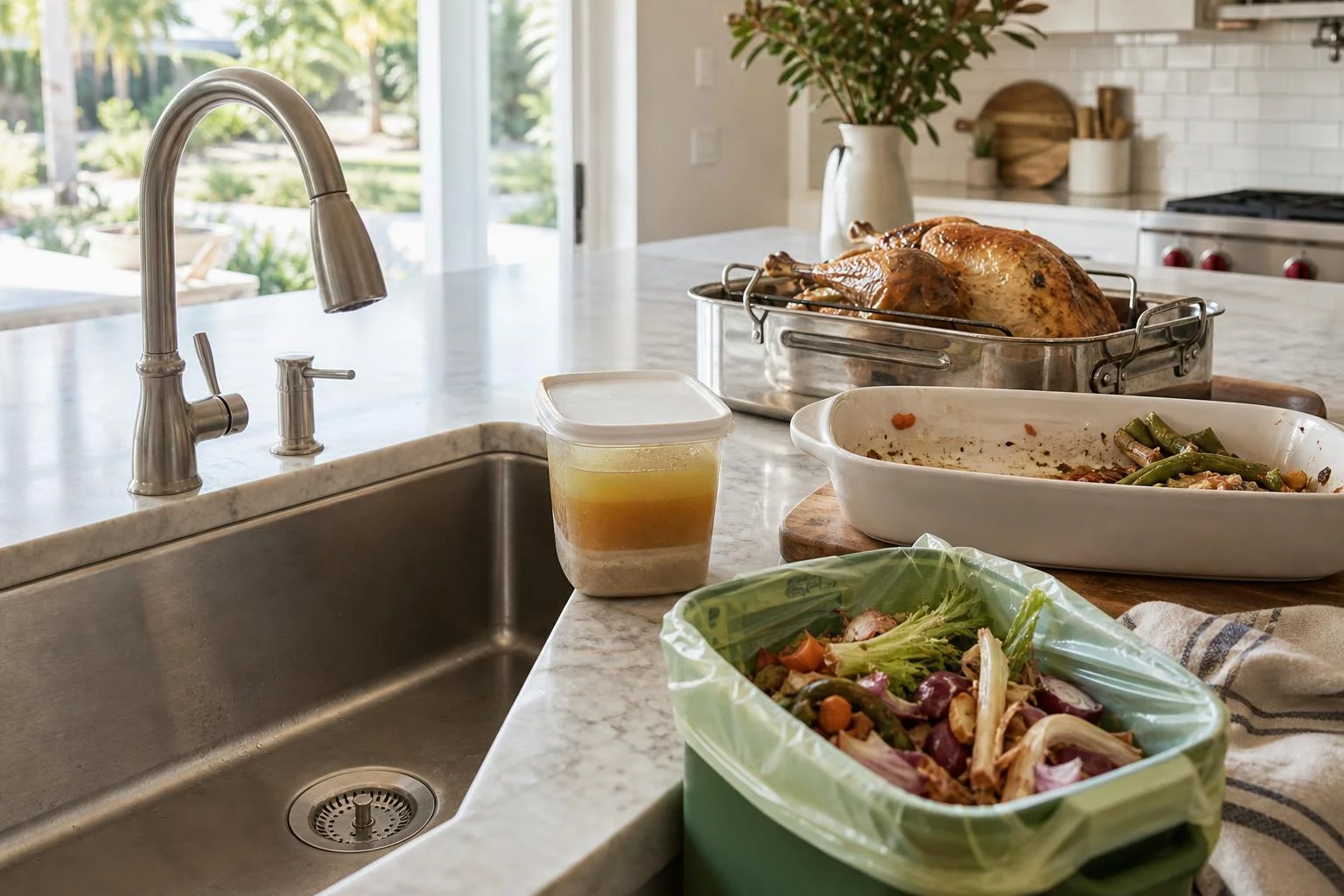
Turkey drippings are one of the biggest Thanksgiving plumbing hazards. Warm grease may look like a liquid as it enters the sink, but it cools quickly as it travels through your pipes. It then coats the inside of the drain, catches food particles, and gradually narrows the passageway for wastewater.
Do not rinse the following down with hot water or dish soap:
- Roasting-pan drippings and turkey skin fat
- Bacon grease, butter, margarine, and shortening
- Gravy, cream sauces, cheese sauces, and oily marinades
- Deep-frying oil and salad dressing residue
Instead, pour cooled grease into a heat-safe container, jar, or can and place it in the trash once it solidifies. Wipe greasy pans with paper towels before washing them. This simple step is one of the most effective Thanksgiving drain tips for preventing a slow kitchen sink drain in homes from Anaheim to Long Beach.
Why Potato Peels, Stuffing, and Coffee Grounds Belong in the Trash
Some foods are troublesome because of their texture. Potato peels can slip past disposal blades but form a starchy paste that adheres inside the trap and drainpipe. Rice, pasta, bread, flour, and stuffing absorb water and expand, creating a thick, glue-like blockage. Even a modest amount can become a problem when it meets existing grease buildup.
Fibrous foods present a different issue. Celery strings, corn husks, onion skins, pumpkin pulp, and asparagus fibers can wrap around garbage disposal components or tangle together farther down the line. Coffee grounds do not dissolve, either. They settle, combine with grease, and create a sediment-like obstruction.
Better ways to handle holiday food waste
- Scrape plates into the trash or a green-waste bin before rinsing.
- Compost appropriate vegetable scraps when local collection rules allow.
- Use a sink strainer to catch small particles during cleanup.
- Run cold water when using the disposal for only small, soft leftovers.
- Never use the disposal to process a large batch of post-dinner scraps.
Garbage disposals are designed to help rinse away minor food residue—not to replace responsible food-waste disposal. If the disposal hums but will not spin, or the sink backs up when it runs, turn it off. Avoid reaching inside or repeatedly resetting it; a professional plumber can safely identify whether the issue is the unit, trap, or main kitchen drain.
Hard Objects and “Flushable” Items Can Damage Plumbing
Turkey bones, fruit pits, nutshells, and hard shell fragments can dull or jam a disposal. They may also lodge in a bend in the piping and collect additional debris. Eggshell membranes are another surprisingly common culprit because their thin lining can catch around disposal parts while crushed shell pieces add grit to the drain.
Keep non-food materials completely out of the kitchen sink and toilet. Paper towels, napkins, disposable wipes, dental floss, and cooking twine do not break down like toilet paper. Despite marketing claims, “flushable” wipes can remain intact long enough to snag on roots, scale buildup, or damaged sewer pipe joints. That is especially concerning for older properties in Los Angeles and Orange County, where mature trees and aging sewer laterals can increase the risk of backups.
Signs you may need professional drain cleaning
- Water pools in the kitchen sink or drains much more slowly than usual.
- The garbage disposal causes water to rise in the other basin.
- You notice gurgling, foul odors, or water backing up in a nearby fixture.
- Multiple drains slow down at once, which can indicate a sewer line issue.
Skip harsh chemical drain cleaners if a clog occurs. These products can be dangerous to handle, may damage certain pipes, and often fail to remove grease-heavy obstructions. Professional drain cleaning and rooter service can clear the blockage while helping protect your plumbing system.
Southern California Holiday Plumbing Prevention Checklist
Before guests arrive, give your kitchen plumbing a quick check. Test the garbage disposal with cold water, clean the sink strainer, and make sure everyone helping with dishes knows what belongs in the trash. For commercial kitchens, catered events, and busy restaurants, schedule proactive drain maintenance before the holiday rush. Higher-volume grease production can overwhelm poorly maintained drain lines and grease-management systems.
Use these final Thanksgiving drain tips to avoid a holiday interruption:
- Set out a clearly labeled container for cooled grease.
- Keep a trash or compost bin within easy reach of the prep area.
- Scrape dishes thoroughly before loading them into the dishwasher.
- Run plenty of cold water after small amounts of disposal-safe residue.
- Arrange preventive drain cleaning if your kitchen has a history of slow drains.
If your home has recurring backups, odors, or frequent clogs, the underlying problem may be grease accumulation, pipe damage, or invasive tree roots rather than a single holiday meal. A camera inspection can help locate the source and guide the right repair.
Thanksgiving cleanup does not have to end with a clogged sink or a stressful sewer backup. Keep turkey grease, starchy leftovers, fibrous vegetable scraps, coffee grounds, bones, and wipes out of your drains, and use the trash, compost, or proper grease disposal instead. These practical steps reduce the strain on your kitchen plumbing and help protect older Southern California drain lines during one of the busiest cooking days of the year. If your sink is draining slowly, your disposal is jammed, or wastewater is backing up, contact A-1 Performance Rooter and Plumbing. Our experienced team provides fast, dependable drain cleaning, rooter service, sewer camera inspections, and plumbing repairs for residential and commercial customers throughout Los Angeles, Orange County, Long Beach, and Southern California.