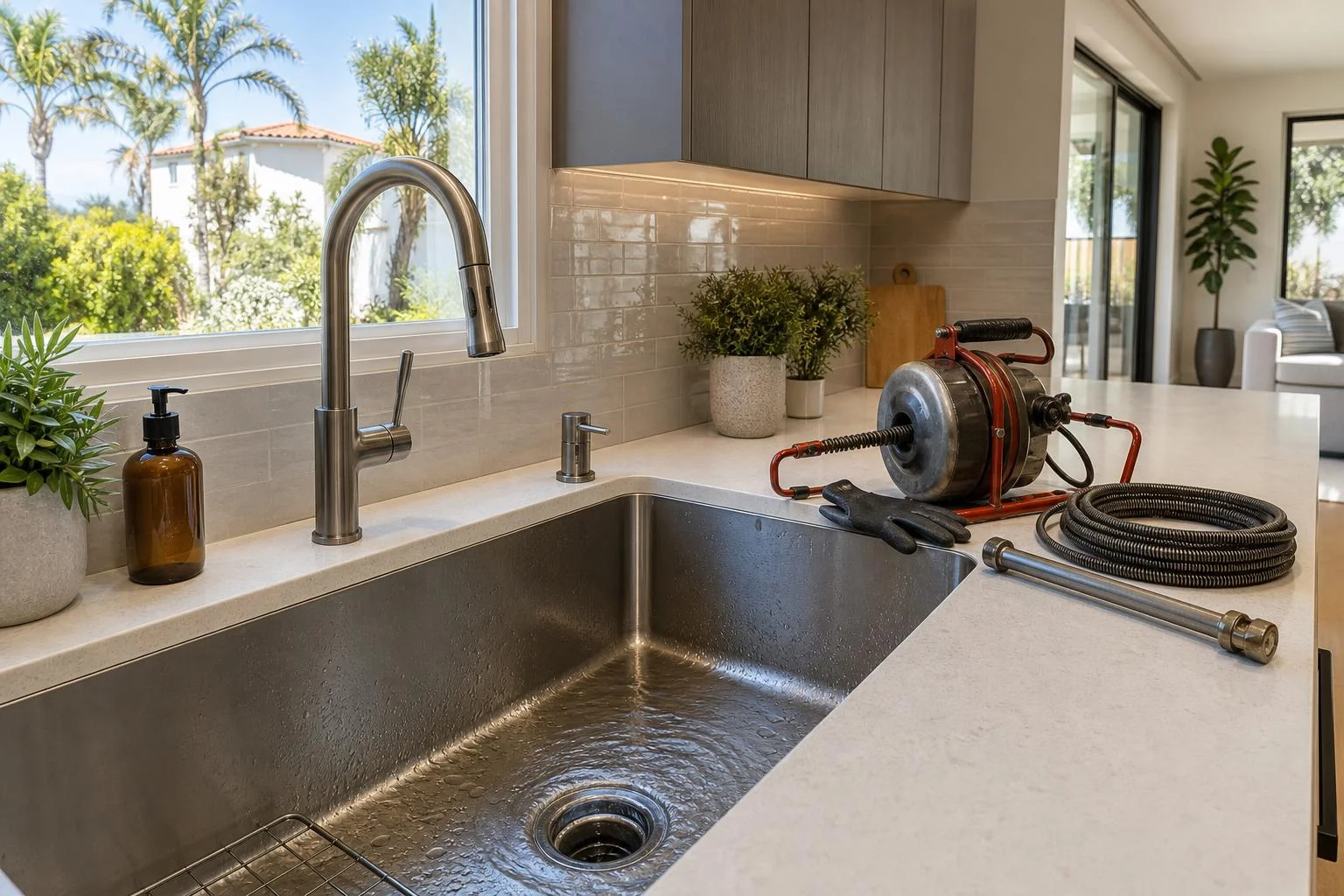


A kitchen sink won’t drain problem can turn meal prep and cleanup into a frustrating mess fast. Whether water is draining slowly, backing up into a double-basin sink, or standing completely still, the issue usually starts with a blockage, plumbing component failure, or venting concern somewhere in the drain system. In Southern California homes and businesses, grease buildup, food waste, aging pipes, and even tree-root intrusion can all contribute to stubborn kitchen drain clogs. The good news is that some minor problems can be handled safely at home. This guide explains six common causes, practical steps to try, and the warning signs that mean it is time to call A-1 Performance Rooter and Plumbing for professional drain cleaning.
Kitchen Sink Won’t Drain: Start With These Safe Checks
Before taking apart pipes or reaching for a chemical product, determine whether the clog is isolated to the kitchen sink. Run water in nearby fixtures and check the other side of a double sink. If several drains are slow, toilets bubble, or wastewater comes up through another fixture, the problem may be in the main sewer line rather than the kitchen drain.
For a single slow or stopped sink, start with these low-risk steps:
- Remove dishes and standing water as much as possible.
- Check the sink strainer for visible food scraps, labels, or debris.
- If there is a garbage disposal, make sure it has power and is not jammed.
- Use a clean sink plunger, sealing the second basin with a wet cloth if applicable.
- Run hot tap water for a few minutes after a minor clog clears.
Avoid repeatedly pouring harsh chemical drain cleaners into the sink. These products may not remove heavy grease or solid obstructions, and they can damage older metal piping, weaken pipe joints, and create a safety hazard for anyone servicing the drain.
1. Grease and Food Buildup Cause Slow Kitchen Drains
Grease is one of the most common reasons a kitchen sink drains slowly. Oils, butter, bacon fat, sauces, and other cooking residues may look liquid when hot, but they cool and stick to the inner pipe walls. Over time, food particles adhere to that coating and reduce the opening inside the drain. Most kitchen sink branch drains are only about 1½ inches in diameter, so buildup does not need to be extensive before flow is affected.
How to fix a grease-related drain clog
For a mild blockage, add a small amount of dish soap and flush with hot tap water. Then use a plunger to help loosen softened debris. Do not use boiling water if you have PVC pipes, since extreme heat can stress some plastic fittings and joints. If the sink remains slow, a professional drain cleaning service can remove the grease accumulation without risking pipe damage.
Prevent future clogs by collecting cooled cooking grease in a disposable container and placing it in the trash. Orange County and Los Angeles County homeowners should never rinse grease down a sink, even with hot water; it simply cools farther down the line.
2. A Jammed Garbage Disposal Can Stop Sink Drainage
A garbage disposal that is jammed, switched off, or clogged can make it seem as though the drain itself has failed. Common culprits include fibrous vegetables, coffee grounds, eggshells, pasta, rice, bones, fruit pits, and large amounts of food at once. These materials can jam the blades or create a dense clog in the disposal outlet and connected drain.
Safe garbage disposal troubleshooting
- Turn off power at the wall switch and, when possible, the circuit breaker.
- Never put hands into the disposal chamber.
- Use the disposal wrench supplied with the unit, or the appropriate Allen key underneath, to rotate the motor manually.
- Press the reset button on the bottom of the disposal after it cools.
- Restore power and run cold water while testing the disposal.
If the unit hums but will not turn, leaks from its base, or repeatedly trips the reset button, arrange garbage disposal repair or replacement. A-1 Performance Rooter and Plumbing helps homeowners from Long Beach to Los Angeles diagnose whether the disposal or the drain line is the actual issue.
3. A Clogged P-Trap May Be Blocking the Sink
The curved pipe directly below the kitchen sink is called the P-trap. It holds water to block sewer gases from entering the home, but it can also catch food particles, grease, and small objects. If water is standing in the sink and plunging does not help, the P-trap may be obstructed.
Place a bucket and towels below the trap, then carefully loosen the slip nuts if you are comfortable with basic plumbing work. Empty the trap, remove debris, inspect the washers, and reassemble it hand-tight before checking for leaks. If you find corroded fittings, cracked pipes, or a clog beyond the trap arm, stop and call a plumber. Forcing old connections can create a leak inside the cabinet or wall.
4. Clogs Farther Down Need Professional Drain Cleaning
When a kitchen sink won’t drain after the disposal, strainer, and P-trap have been checked, the obstruction may be deeper in the branch line. This is especially common in older Southern California homes with decades of grease accumulation, cast-iron pipe corrosion, or poorly sloped drain pipes. In restaurants and commercial kitchens, high volumes of fats, oils, and grease can create recurring blockages that require more than a simple snake.
Professional drain cleaning may involve a cable machine, hydro jetting, or a drain camera inspection. Camera inspections are particularly useful because they identify the exact location and nature of the problem—such as grease scale, a broken fitting, or pipe deterioration—before a repair recommendation is made. This targeted approach helps avoid unnecessary excavation or repeated temporary fixes.
5. Plumbing Vent Problems Can Make a Sink Gurgle
A drain system needs air movement to allow wastewater to flow smoothly. The plumbing vent, usually connected through the roof, equalizes pressure in the pipes. When a vent is blocked by leaves, nesting material, or another obstruction, the kitchen sink may drain slowly, gurgle, or produce sewer-like odors.
Vent diagnosis is best left to a licensed plumbing professional. Climbing onto a roof creates safety risks, and the same symptoms can also point to a partial drain blockage. A plumber can evaluate the drain and vent system to determine the correct repair instead of treating only the visible symptom.
6. Main Sewer Line Issues Require Fast Attention
Not every kitchen backup begins in the kitchen. If you notice water backing up in a shower, toilet, or laundry drain when the kitchen sink runs, you may have a main sewer line blockage. Mature trees throughout neighborhoods in Los Angeles, Long Beach, and Orange County can send roots toward older sewer pipes in search of moisture. Cracked, offset, or aging sewer lines are especially vulnerable to root intrusion.
Call for professional rooter service promptly if you notice these signs:
- Multiple drains are slow or clogged at the same time.
- Toilets gurgle when the sink, washer, or dishwasher drains.
- Wastewater backs up into a tub, shower, or floor drain.
- Drain odors persist throughout the home or business.
- Clogs return soon after plunging or snaking.
Prompt sewer camera inspection and rooter service can help prevent indoor wastewater damage and identify whether pipe repair is needed.
When to Call a Southern California Plumber
A plunger and basic cleanup can resolve a minor kitchen clog, but recurring drainage issues deserve professional attention. Do not keep forcing water into a fully blocked sink, and do not mix drain-cleaning chemicals. If the clog is deep, water is backing up elsewhere, pipes are leaking, or you suspect tree roots, an experienced plumber can clear the line safely and inspect the condition of the plumbing.
When your kitchen sink won’t drain, start by checking for surface debris, disposal trouble, and a simple P-trap clog. Grease, food buildup, deeper drain obstructions, vent issues, and sewer line problems are all common causes—and each requires the right solution. Routine habits such as scraping plates, disposing of grease in the trash, and using the disposal correctly can reduce preventable clogs. For persistent slow drains, complete backups, or suspected sewer issues in Los Angeles, Orange County, Long Beach, and surrounding Southern California communities, contact A-1 Performance Rooter and Plumbing. Our skilled team provides dependable rooter service, drain cleaning, camera inspections, and plumbing repairs to get your kitchen flowing properly again.