

Choosing between gas, electric, tankless, and conventional hot water heaters can feel overwhelming, especially when an aging unit starts leaking, runs out of hot water, or drives up monthly utility costs. The right system depends on your household’s hot-water demand, available fuel source, installation space, budget, and long-term efficiency goals. For homeowners and business owners throughout Los Angeles, Orange County, Long Beach, and surrounding Southern California communities, the decision also involves local energy costs, building requirements, and the region’s hard-water conditions. This guide explains the major water-heater options, compares their benefits and limitations, and outlines when professional installation from A-1 Performance Rooter and Plumbing is the best next step.
Hot Water Heaters: Start With Your Daily Demand
What type of water heater is best? The best option is the one that reliably meets your peak hot-water demand while fitting your fuel availability, budget, and efficiency priorities. A household with several back-to-back showers has different needs than a studio apartment, restaurant, salon, or commercial restroom facility.
Before selecting a new unit, consider:
- Household or business size: More occupants, fixtures, or employees generally require more hot-water capacity.
- Peak usage: Morning showers, laundry, dishwashing, and commercial cleanup can create high-demand periods.
- Fuel source: Natural gas may already be available, while some properties are better suited to electric equipment.
- Available space: Tank units require a dedicated footprint; tankless models mount to a wall.
- Future plans: A larger family, added bathroom, kitchen renovation, or accessory dwelling unit may change your needs.
A conventional tank water heater stores heated water for immediate use. Tankless systems heat water only when a fixture calls for it. The U.S. Department of Energy notes that tankless water heaters can be roughly 24% to 34% more energy efficient than conventional storage-tank models for homes using 41 gallons or less of hot water daily. Actual savings vary based on equipment sizing, fuel type, installation quality, and local usage patterns.
Gas Water Heaters for Fast Recovery and High Demand
Gas water heaters remain a popular choice for many Southern California properties because natural gas is widely available and gas units can heat water quickly. A traditional gas tank water heater is often a practical replacement when an existing home already has the proper gas line, venting, and installation area.
Advantages of gas water heaters
- Fast recovery rates for households that use substantial hot water.
- Often lower operating costs than standard electric resistance tank models, depending on utility rates.
- Reliable performance for multiple showers or appliances used in close succession.
- Gas tankless models can provide a strong flow rate when correctly sized.
However, gas water heaters need proper combustion air, venting, gas-piping capacity, and safety controls. Replacing a basic tank with a high-efficiency gas model or tankless unit may require vent modifications, a larger gas line, condensate drainage, or permit work. These details are not DIY projects. Improper installation can create carbon monoxide, fire, venting, or gas-leak hazards.
For homes in older areas of Los Angeles, Long Beach, or Orange County, A-1 Performance Rooter and Plumbing can assess whether existing gas connections and venting support the new system. This helps prevent undersized equipment, poor performance, and expensive corrections after installation.
Electric Water Heaters: Simple Installation and Efficiency Options
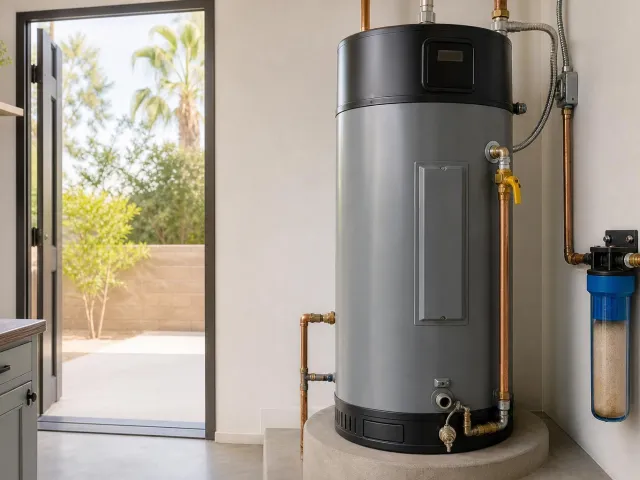
Electric water heaters use heating elements rather than a burner. Standard electric tank units are generally straightforward where sufficient electrical service is available and natural gas is not. They do not require combustion venting, which can make placement more flexible in certain condos, apartments, and commercial spaces.
When an electric water heater makes sense
An electric water heater may be a smart choice when:
- Your property does not have a gas connection or venting route.
- You want to avoid combustion-based equipment inside the building.
- You are replacing an existing electric model and the electrical circuit is already appropriately sized.
- You are considering a high-efficiency electric heat-pump water heater where space and climate allow.
The primary tradeoff is recovery speed. Standard electric tank units can take longer to reheat after heavy use than comparable gas models. Electricity costs can also affect long-term operating expenses. Still, modern electric and heat-pump technologies can be appealing for efficiency-focused households, particularly when paired with solar energy.
Tankless electric units are compact, but they can require very large electrical capacity to serve an entire home. In many Southern California homes, upgrading the electrical panel or wiring may be necessary. A professional plumbing and electrical assessment is essential before selecting an electric tankless system.
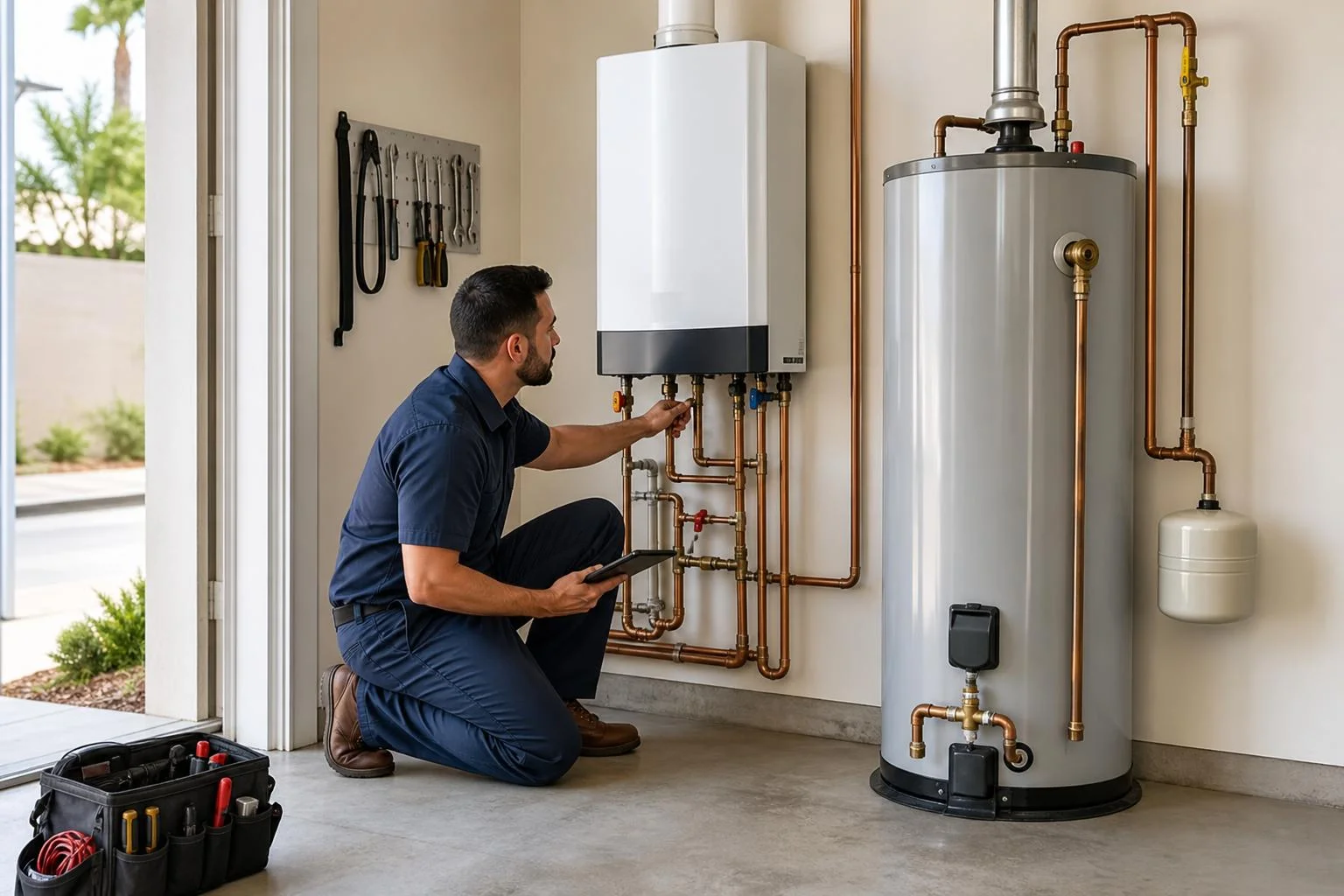
Tankless Water Heaters vs. Traditional Tank Systems
Are tankless water heaters worth it? Tankless water heaters can be worth the investment for properties that want endless hot water, wall-mounted space savings, and improved energy efficiency. They must be sized and installed correctly to deliver the expected results.
A tankless water heater activates when hot-water flow begins. Instead of maintaining a large reservoir at a set temperature all day, it heats water as it passes through the unit. This eliminates the standby heat loss associated with stored hot water.
Benefits of tankless water heaters
- Continuous hot water: No waiting for a depleted tank to refill, provided the system is properly sized.
- More usable space: Wall-mounted units free up closet, garage, or utility-room space.
- Potential energy savings: On-demand heating reduces standby losses.
- Long service life: With proper maintenance, tankless units often last longer than conventional tanks.
Reasons a tank water heater may still be better
- Lower upfront purchase and installation cost.
- Simpler replacement in homes with compatible existing connections.
- Reliable performance for predictable daily use when sized correctly.
- Less need for major gas-line, venting, or electrical upgrades in some properties.
Southern California’s mineral-rich water can create scale buildup inside any water-heating equipment, but tankless heat exchangers are particularly dependent on routine flushing. Annual maintenance is commonly recommended, especially in hard-water areas. A-1 Performance Rooter and Plumbing can provide professional tankless water heater maintenance to help protect efficiency, preserve flow, and extend equipment life.
Water Heater Installation and Maintenance in Southern California
Proper water heater installation is as important as the model you choose. California and local jurisdictions may have requirements related to seismic strapping, drain pans, temperature-and-pressure relief valves, venting, expansion tanks, gas shutoff valves, and permits. These safeguards are especially important in earthquake-prone Southern California.
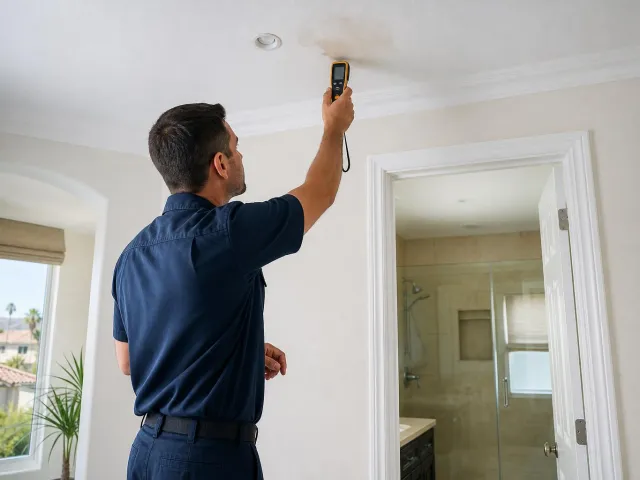
To help avoid sudden failure and costly water damage, schedule service if you notice:
- Rust-colored water, metallic odors, or visible corrosion around the tank.
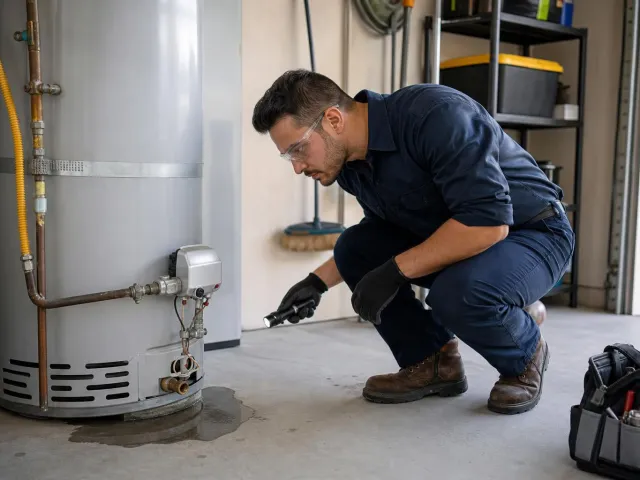
- Water pooling near the base of the unit.
- Rumbling, popping, or banging sounds caused by sediment buildup.
- Inconsistent temperatures or rapidly disappearing hot water.
- A pilot light that will not stay lit, error codes, or a suspected gas smell.
For tank-style hot water heaters, annual inspections can identify sediment, worn anode rods, valve problems, and early leaks. For tankless equipment, regular descaling helps counteract hard-water mineral deposits. Businesses in restaurants, multi-family properties, offices, and retail facilities should prioritize preventative service because a water-heater outage can interrupt operations and affect customers or tenants.
A-1 Performance Rooter and Plumbing evaluates hot-water usage, plumbing layout, energy source, and code considerations to recommend a system that fits the property—not a one-size-fits-all replacement.
Choose the Right Hot Water Heater With Local Experts
Gas, electric, tankless, and traditional tank water heaters each offer valuable advantages. Gas systems can provide quick recovery for high demand, electric systems offer flexible vent-free installation options, tankless units deliver on-demand performance and space savings, and storage tanks remain a cost-effective, dependable choice for many properties. The key is accurate sizing, code-compliant installation, and ongoing maintenance suited to Southern California’s water conditions. If your water heater is leaking, underperforming, or nearing the end of its service life, contact A-1 Performance Rooter and Plumbing. Our experienced team serves Los Angeles, Orange County, Long Beach, and nearby communities with expert water heater repair, replacement, tankless installation, and preventative maintenance. Call today to schedule a professional assessment and restore dependable hot water.