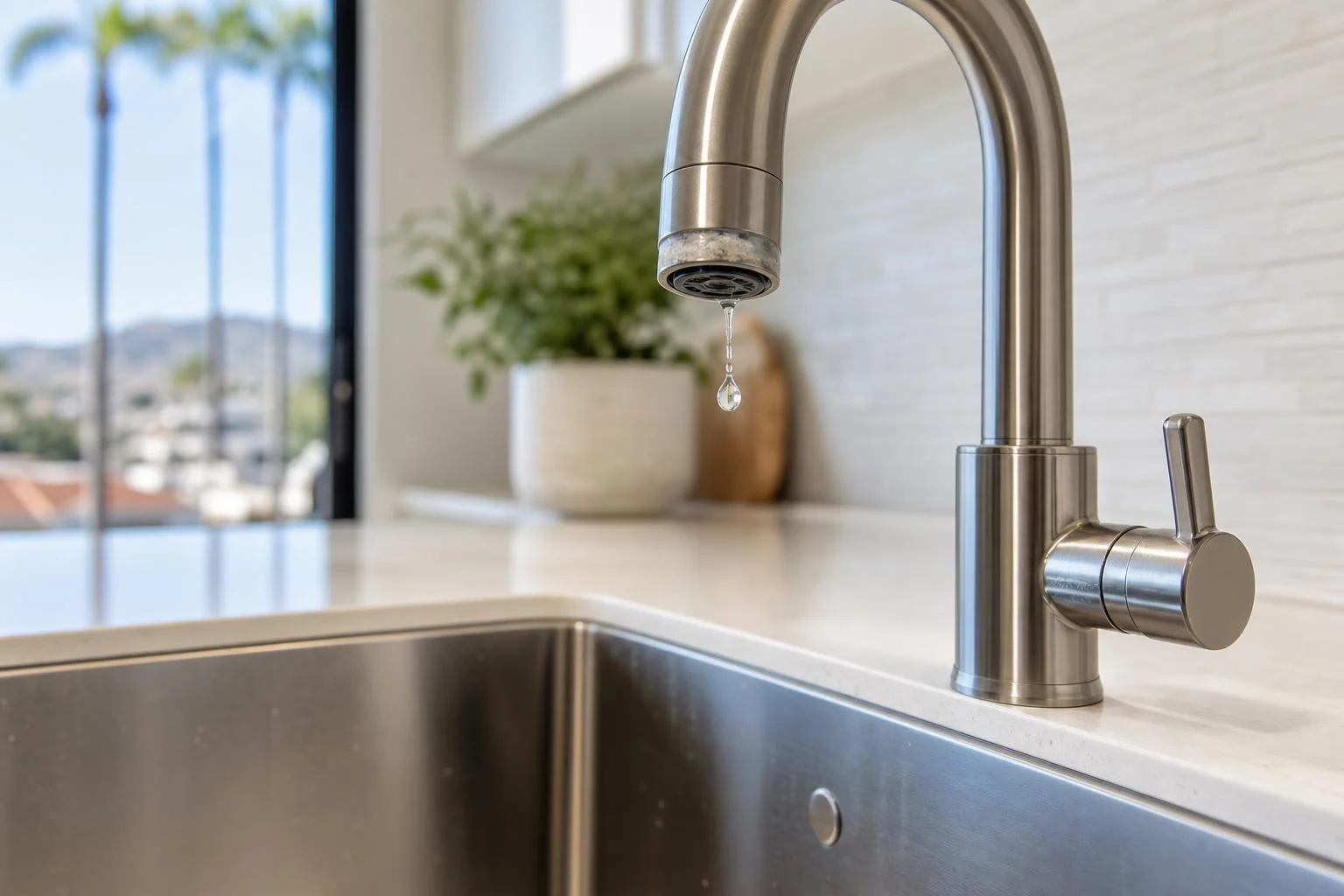


A faucet that drips long after you turn off the handle is more than an annoying sound—it can waste water, increase utility costs, and signal a worn or damaged part inside the fixture. If you are wondering why your faucet won’t stop dripping, the cause is often a failed washer, cartridge, O-ring, valve seat, or water-pressure issue. Southern California’s hard water can accelerate mineral buildup and wear in faucets throughout Los Angeles, Orange County, Long Beach, and nearby communities. The good news is that many leaks have a clear solution once the source is identified. Below, A-1 Performance Rooter and Plumbing explains what causes a dripping faucet, when a simple repair may help, and when it is time to call a professional plumber at 800-997-3090.
Why a Faucet Won’t Stop Dripping: The Quick Answer
A faucet usually continues dripping because an internal component can no longer create a watertight seal when the handle is closed. Depending on the faucet style, that component may be a rubber washer, ceramic disc, cartridge, O-ring, or valve seat. Even a small amount of corrosion, cracking, mineral scale, or debris can leave enough of a gap for water to escape.
The U.S. Environmental Protection Agency notes that household leaks can waste nearly 10,000 gallons of water per year in an average home. A single slow drip may seem minor, but ongoing leaks add up quickly—especially when multiple bathrooms, kitchen sinks, or commercial fixtures are involved.
- Drip from the spout: Usually points to a worn cartridge, washer, seal, or valve seat.
- Water around the handle: Often indicates a damaged O-ring, packing nut, or cartridge.
- Leak under the sink: May involve supply lines, shutoff valves, drain connections, or the faucet body.
- Dripping after a recent repair: Could mean the wrong replacement part was used or sediment remains inside the fixture.
Common Dripping Faucet Causes in Southern California Homes
Worn Washers and Seals
Compression faucets, which typically have separate hot and cold handles, rely on washers that press against a valve seat to stop water flow. Repeated use eventually flattens, cracks, or hardens the washer. When it no longer seals completely, water can pass through and drip from the spout. Replacing the washer can solve the problem, but the replacement must match the faucet’s size and design.
Failed Cartridge or Ceramic Disc
Many newer single-handle faucets use a cartridge, while disc faucets use ceramic discs. These components regulate water temperature and flow. A cracked cartridge, worn seals, or scratched discs can cause a persistent drip. Cartridge replacement is common, but removing the old part without damaging the faucet body requires the right tools and technique.
Hard Water Mineral Buildup
Hard water is a frequent plumbing concern across Los Angeles County and Orange County. Minerals can collect around valve seats, aerators, cartridges, and internal seals. This buildup can prevent components from closing properly, cause rough handle operation, and shorten the life of the fixture. If your faucet drips and also has reduced flow, white crust around the spout, or a stiff handle, mineral scale may be contributing to the issue.
Corroded Valve Seat
The valve seat connects the faucet to the spout and works with internal sealing components to stop water. Over time, corrosion or mineral deposits can pit its surface. A new washer alone may not stop the leak if the valve seat is damaged. A professional plumber can inspect, clean, resurface, or replace the valve seat as needed.
How to Check a Dripping Faucet Before Calling a Plumber
Homeowners can take a few safe steps to gather useful information before scheduling faucet repair. Do not force handles or overtighten hardware; excessive pressure can damage the fixture and make the leak worse.
- Identify where the water appears. Check whether the drip comes from the spout, handle base, supply connection, or beneath the sink.
- Determine the faucet type. Count the handles and note whether the fixture is a compression, ball, cartridge, or ceramic disc model.
- Check the shutoff valves. Look under the sink for hot and cold shutoff valves. If the leak becomes heavy, turn these valves clockwise to limit water flow.
- Look for visible mineral scale. White, green, or rusty deposits can indicate hard-water buildup or corrosion.
- Listen for other plumbing symptoms. Whistling pipes, banging noises, fluctuating pressure, or leaks at multiple fixtures may point to a larger plumbing issue.
If you choose to remove an aerator for cleaning, place a towel in the sink drain first so small parts do not fall into the plumbing. For anything beyond basic cleaning, calling an experienced plumber is often the most efficient way to avoid stripped screws, broken cartridges, or hidden water damage.
When a Dripping Faucet Needs Professional Repair
Professional faucet repair is recommended when the leak persists after replacing an obvious washer or aerator, when the fixture is old or corroded, or when you cannot safely turn off the water. It is also wise to call a plumber when water is leaking below the cabinet, staining walls, damaging flooring, or creating moisture near electrical outlets.
A-1 Performance Rooter and Plumbing can diagnose the exact source of the leak and recommend the right repair for residential and commercial properties. Rather than guessing which part fits, our plumbing team can inspect the faucet, supply connections, shutoff valves, and surrounding plumbing system. We help customers in Long Beach, Los Angeles, Orange County, and throughout Southern California address dripping faucets before a small repair turns into a costly restoration project.
- Persistent drips from a kitchen, bathroom, laundry, or outdoor faucet
- Leaking faucet handles or loose, difficult-to-turn controls
- Corroded fixtures and worn internal components
- Leaks under cabinets or around shutoff valves
- Low water pressure, mineral buildup, and recurring fixture problems
Prevent Future Faucet Leaks With Simple Maintenance
Regular maintenance can help extend the life of faucets and reduce surprise leaks. Avoid cranking handles tightly; modern faucets should turn off with gentle pressure. Clean aerators periodically to remove mineral debris, and inspect under-sink supply lines for corrosion or moisture. If hard-water scale is common in your home or business, ask a plumbing professional about appropriate treatment options and fixture maintenance.
It is also important to act promptly when you notice a drip. A faucet that leaks intermittently may become constant as seals wear further. Timely faucet repair protects your water bill, conserves water, and helps prevent moisture damage to cabinetry and countertops.
Stop the Drip With Trusted Southern California Plumbing Help
A faucet that will not stop dripping usually needs more than a tighter handle. Worn washers, faulty cartridges, corroded valve seats, and Southern California hard-water deposits can all prevent a fixture from sealing correctly. Identifying the exact cause is the key to making a lasting repair—not just temporarily reducing the drip. Whether you have a leaking kitchen faucet in Los Angeles, a bathroom faucet problem in Long Beach, or recurring hard-water fixture issues in Orange County, A-1 Performance Rooter and Plumbing is ready to help. Do not let a small leak waste water and create a bigger plumbing problem. Call A-1 Performance Rooter and Plumbing at 800-997-3090 today to schedule professional faucet repair and dependable local plumbing service.