

You paid the utility bill, turned on the shower, and still got lukewarm or cold water. It is frustrating, especially when your water heater not getting hot issue appears without warning. While an unpaid gas or electric bill can stop a water heater from working, payment is only one part of the system. A tripped breaker, extinguished pilot light, faulty heating element, failed thermostat, or sediment buildup may be the real problem. In Southern California, hard water and aging plumbing systems can make these issues more common in homes and businesses from Los Angeles to Orange County and Long Beach. Below, A-1 Performance Rooter and Plumbing explains what to check safely, when to call for professional water heater repair, and how to prevent another cold-water surprise.
Water Heater Not Getting Hot: Start With These Safe Checks
Why is my water not getting hot if I paid the bill? Your utility service may be active, but the water heater may not be receiving power or gas, or one of its internal components may have failed. Before assuming the unit needs replacement, perform a few simple checks.
- Check whether the problem affects every fixture. If only one shower or sink has poor hot water, the issue may be a faucet cartridge, shower mixing valve, or anti-scald setting—not the water heater itself.
- Confirm the water heater has time to recover. A conventional tank heater needs time to heat a new tank of water after several long showers, laundry loads, or dishwasher cycles. If hot water runs out quickly, recovery may be slow due to a failing burner, heating element, or sediment.
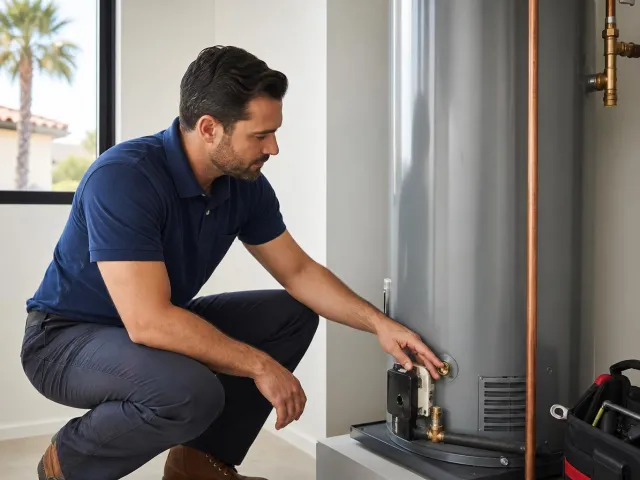
- Look for power or gas warning signs. For an electric unit, check whether the dedicated water-heater breaker has tripped. For a gas unit, verify that the gas shutoff valve is open and that other gas appliances are operating normally.
- Check the temperature setting. Most households use a setting near 120°F for a balance of comfort, energy efficiency, and scald prevention. Do not turn a thermostat excessively high to compensate for a malfunction.
- Inspect for leaks or error codes. Water around the base, rust-colored water, a blinking diagnostic light, or a displayed error code all call for prompt professional attention.
Never remove electrical access panels, disconnect wiring, or relight a pilot if you smell gas. Leave the area, avoid switches and flames, and contact your gas provider or an emergency plumbing professional.
Common Gas Water Heater Problems in Los Angeles and Orange County
Gas water heaters are common throughout Southern California, but several components must work together to deliver hot water. If the tank is full of cold water, a gas-related issue may be responsible.
Pilot light or ignition failure
Older water heaters may have a standing pilot light that can go out because of a dirty pilot assembly, a faulty thermocouple, or airflow problems. Newer units often use electronic ignition and may show a status-light pattern or error code when ignition fails. A blocked combustion air intake can also prevent safe operation. A licensed plumber can diagnose the cause, clean the system where appropriate, and verify safe combustion.
Gas control valve or thermostat malfunction
The gas control valve regulates burner operation and water temperature. When it fails, the burner may not ignite, may shut off too soon, or may produce only lukewarm water. Because this component directly involves gas and temperature controls, it should be inspected and replaced by a qualified professional.
Burner or venting concerns
A dirty burner can reduce heating performance. In addition, venting problems can cause a water heater to shut down for safety. This is particularly important in older homes in Long Beach, Pasadena, and parts of Los Angeles where equipment may be located in garages, closets, or tight utility areas. If you notice soot, unusual odors, condensation around the vent, or a repeatedly extinguished pilot, schedule water heater repair immediately.
Electric Water Heater Troubleshooting: Breakers, Elements, and Thermostats
An electric water heater usually has two heating elements and thermostats. When one component fails, you may still get a small amount of warm water—but not enough for a normal shower. When both fail or the unit loses power, the water stays cold.
- Tripped circuit breaker: Reset it once if it has tripped. If it trips again, do not keep resetting it; an electrical fault, damaged element, or wiring issue may be present.
- Failed upper heating element: This often results in little to no hot water because the upper element starts the heating cycle.
- Failed lower heating element: You may have brief hot water that quickly becomes cold, especially during back-to-back showers.
- Defective thermostat: A thermostat that does not sense temperature correctly may prevent the elements from heating the tank properly.
- High-limit reset switch: Some units have a safety reset that trips when the tank overheats. A reset without finding the underlying cause can be unsafe.
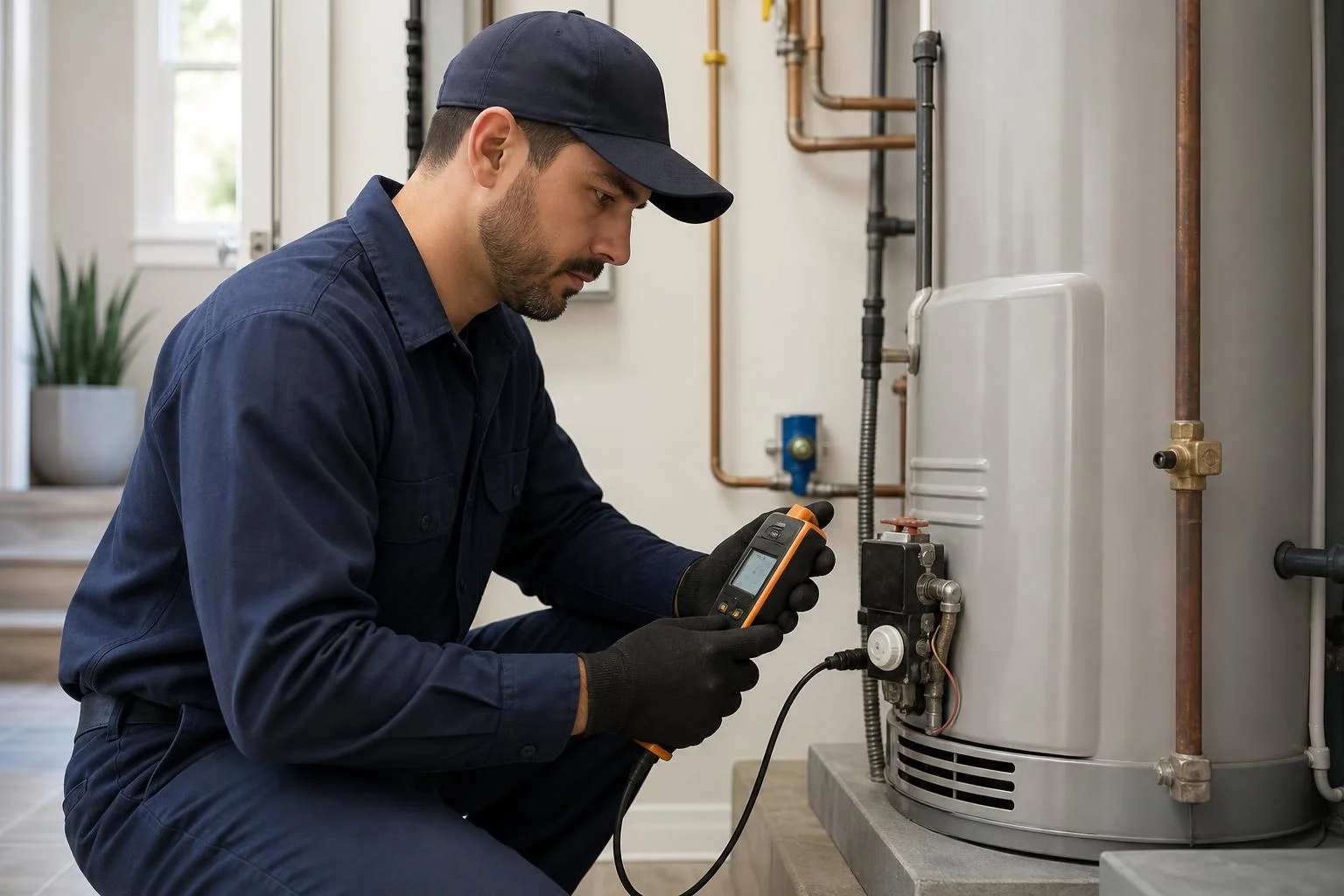
Electric water heaters use high voltage, even when the unit appears inactive. A-1 Performance Rooter and Plumbing can safely test the breaker, wiring, thermostats, and heating elements to determine whether a targeted repair or replacement is the better value.
Hard Water and Sediment Can Make Hot Water Run Out Fast
Southern California’s mineral-rich water is tough on water heaters. Calcium and magnesium can settle in the bottom of a tank, creating a sediment layer between the burner or heating element and the water. This forces the unit to work harder, reduces usable hot-water capacity, and can contribute to popping or rumbling noises.
According to the U.S. Department of Energy, water heating can account for roughly 18% of a home’s energy use. A neglected, inefficient water heater can increase utility costs while delivering less comfort. Sediment is especially common in areas with hard water, including many communities in Orange County, Riverside County, and the Inland Empire.
Signs sediment may be affecting your water heater include:
- Hot water runs out sooner than it used to.
- The tank makes popping, cracking, or rumbling sounds.
- Water takes much longer to heat.
- Utility costs rise without a clear change in usage.
- Hot water looks rusty or contains visible particles.
Periodic tank flushing can help manage mineral accumulation, but it must be performed carefully. On older neglected tanks, disturbing heavy sediment may expose existing corrosion or create leaks. A professional inspection can identify whether flushing is appropriate and evaluate the anode rod, drain valve, temperature-pressure relief valve, and tank condition.
When to Call for Water Heater Repair or Replacement
A lack of hot water is not always an emergency, but certain symptoms should not wait. Call a professional plumber if you have no hot water after basic checks, see water leaking from the tank, smell gas, notice discolored water, or hear persistent loud noises. A leaking tank generally cannot be repaired and often requires water heater replacement.
Age matters, too. Traditional storage-tank water heaters commonly last around 8 to 12 years, depending on water quality, maintenance, and usage. If your older unit needs a major repair, replacement with a properly sized high-efficiency tank or tankless water heater may offer better long-term reliability. The right size depends on household occupancy, peak hot-water demand, fuel source, available venting, and local code requirements—not simply the size of the old unit.
For restaurants, apartment buildings, retail spaces, and offices, lost hot water can interrupt operations and affect customer comfort. A-1 Performance Rooter and Plumbing provides residential and commercial plumbing support throughout Southern California, with practical recommendations based on the condition of your equipment and your daily hot-water needs.
Restore Reliable Hot Water With A-1 Performance Rooter and Plumbing
If your water heater not getting hot problem continues after you paid the bill and checked the basics, the issue likely needs a professional diagnosis. Gas controls, electrical components, mineral buildup, and aging tanks can all produce the same frustrating result: cold showers and wasted energy. Acting early can help prevent water damage, higher utility costs, and a complete system failure. A-1 Performance Rooter and Plumbing serves homeowners and businesses across Los Angeles, Long Beach, Orange County, and surrounding Southern California communities with dependable water heater repair, installation, drain cleaning, and general plumbing services. Contact our experienced team today to identify the cause of your hot-water problem and get a clear solution you can trust.