

Few home problems are more disruptive than turning on the shower and finding only lukewarm or cold water. If your water heater not getting hot issue is affecting morning routines, dishwashing, laundry, or a commercial property’s daily operations, the cause may range from a simple thermostat setting to a failed heating component or gas-supply problem. Southern California’s hard-water minerals can also shorten water heater life and reduce performance over time. This guide explains how to safely narrow down the problem, which fixes homeowners can handle, and when to call a professional plumber. A-1 Performance Rooter and Plumbing helps customers throughout Los Angeles, Orange County, Long Beach, and surrounding communities restore dependable hot water quickly.
Water Heater Not Getting Hot: Start With These Checks
A lack of hot water does not always mean the tank has failed. Begin with a few safe, basic checks before scheduling water heater repair. Do not remove access panels, touch electrical wiring, or attempt gas-line repairs unless you are qualified to do so.
- Check demand: A standard tank water heater can run out of stored hot water after several long showers, a laundry cycle, and dishwasher use. Wait 30 to 60 minutes, then test the hot-water tap again.
- Verify the thermostat setting: Most households should set water heaters to about 120°F for effective performance and reduced scalding risk. A setting that was accidentally lowered can create a lukewarm-water problem.
- Look for leaks: Water around the base of the tank, at fittings, or from the temperature-and-pressure relief valve requires prompt attention. A leaking tank often needs replacement.
- Confirm the energy source: Check the electrical panel for a tripped water-heater breaker. For gas units, verify that the gas valve is open and that other gas appliances are working.
- Check the shutoff valve: Make sure the cold-water supply valve above the heater is fully open. Restricted flow can affect output and recovery.
If water is hot at one fixture but not another, the water heater may not be the source of the issue. A failed shower cartridge, anti-scald valve, or mixing valve can blend too much cold water into the hot line. This is a common reason for a single cold shower when the kitchen sink still has hot water.
Common Gas Water Heater Problems in Los Angeles Homes
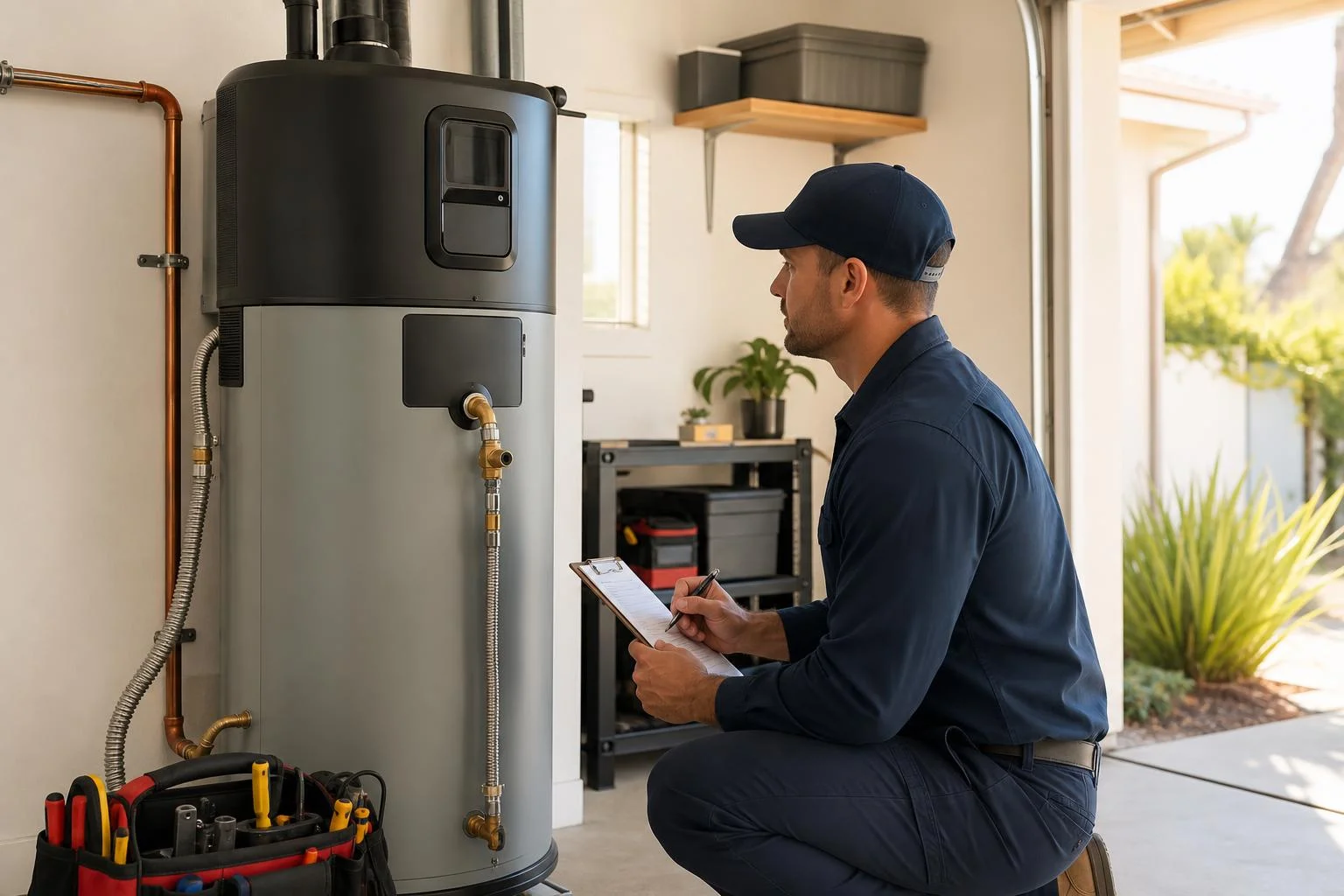
For a gas water heater not heating, the pilot light, burner, venting, or gas supply may be responsible. Many homes in Los Angeles and Long Beach use natural-gas tank water heaters, and these systems should be inspected carefully when hot water stops.
Pilot light or igniter failure
Older gas water heaters use a standing pilot light, while newer models may have an electronic igniter. If the pilot is out, follow the manufacturer’s lighting instructions printed on the unit. If it will not stay lit, the thermocouple, thermopile, pilot assembly, or gas control valve may be failing. Repeated relighting is not a lasting solution; schedule professional water heater repair.
Burner or gas-control problems
A functioning pilot does not guarantee that the main burner is firing. A dirty burner, failing thermostat, defective gas control valve, or inadequate gas pressure can prevent the burner from heating the tank. Signs include no burner flame when hot water is called for, unusual clicking, soot, or inconsistent water temperature.
Important safety note: If you smell gas, hear hissing near a gas connection, or suspect a gas leak, leave the area, avoid switches and open flames, and contact your gas utility or emergency services from a safe location. Do not try to diagnose a suspected leak yourself.
Electric Water Heater Troubleshooting and Heating Elements
An electric water heater not getting hot commonly has a tripped breaker, reset-button issue, failed thermostat, or burned-out heating element. Electric models typically have upper and lower thermostats and elements. Depending on which part fails, the result may be no hot water at all or a small amount of hot water that disappears quickly.
- No hot water: This can point to a tripped double-pole breaker, power issue, high-limit reset problem, or upper heating-element failure.
- Hot water runs out unusually fast: A failed lower heating element is a frequent cause because the unit heats only the upper portion of the tank.
- Water is excessively hot: A thermostat may be malfunctioning and should be evaluated promptly to help prevent scalding.
Homeowners can check the breaker and, if familiar with the manufacturer’s instructions, the external reset button. Beyond that, electrical diagnosis should be left to a licensed plumbing professional or qualified technician. Water and high-voltage electricity are a dangerous combination.
Hard Water, Sediment, and Water Heater Maintenance
Hard water is a major factor in Southern California water heater performance. Mineral-heavy water can leave calcium and sediment at the bottom of a tank, insulating the water from the burner or heating element. This forces the system to work longer, reduces available hot water, and may contribute to popping or rumbling sounds.
The U.S. Department of Energy estimates that water heating accounts for about 18% of a typical home’s energy use. Maintaining the unit can help protect both comfort and operating costs. For homes in Orange County, Los Angeles County, and nearby areas with hard-water conditions, consider these practical maintenance steps:
- Have a professional inspect and flush a tank water heater regularly, often annually when sediment buildup is significant.
- Test the temperature-and-pressure relief valve according to the manufacturer’s guidance or have a plumber inspect it.
- Inspect for corrosion, moisture, rust-colored water, and deteriorated supply connectors.
- Consider water treatment or a water softener when persistent mineral scale affects fixtures and appliances.
- Keep the area around the water heater clear for safe access, ventilation, and service.
Tankless water heaters also require descaling. Although they do not store hot water, mineral scale can restrict the heat exchanger and cause fluctuating temperatures, error codes, or reduced flow. Professional tankless water heater maintenance is especially valuable in hard-water areas.
When to Repair or Replace a Water Heater
Professional service is recommended when basic checks do not restore hot water, when the unit leaks, or when you see corrosion, soot, error codes, or discolored water. A plumber can determine whether a targeted repair—such as replacing an element, thermostat, thermocouple, or mixing valve—will provide reliable results.
Replacement may be the more cost-effective option if a tank-style unit is approaching or beyond its typical 8-to-12-year service life, has a leaking tank, or needs repeated repairs. A properly sized replacement matters: a unit that is too small will struggle during busy mornings, while an oversized system can waste energy. A-1 Performance Rooter and Plumbing can evaluate household demand, fixture count, energy source, installation requirements, and whether a high-efficiency tank or tankless model suits your property.
Restore Reliable Hot Water With Local Plumbing Help
A water heater not getting hot can stem from a simple breaker issue, depleted tank capacity, mineral sediment, or a component that requires professional repair. Start with safe checks, but do not take chances with gas, electrical parts, leaks, or pressure-relief components. Prompt service can prevent cold showers from becoming water damage, higher utility bills, or a complete system failure. For dependable water heater repair, maintenance, installation, and emergency plumbing support in Los Angeles, Orange County, Long Beach, and across Southern California, contact A-1 Performance Rooter and Plumbing. Our experienced team can diagnose the cause, explain clear repair or replacement options, and get your hot water flowing again.