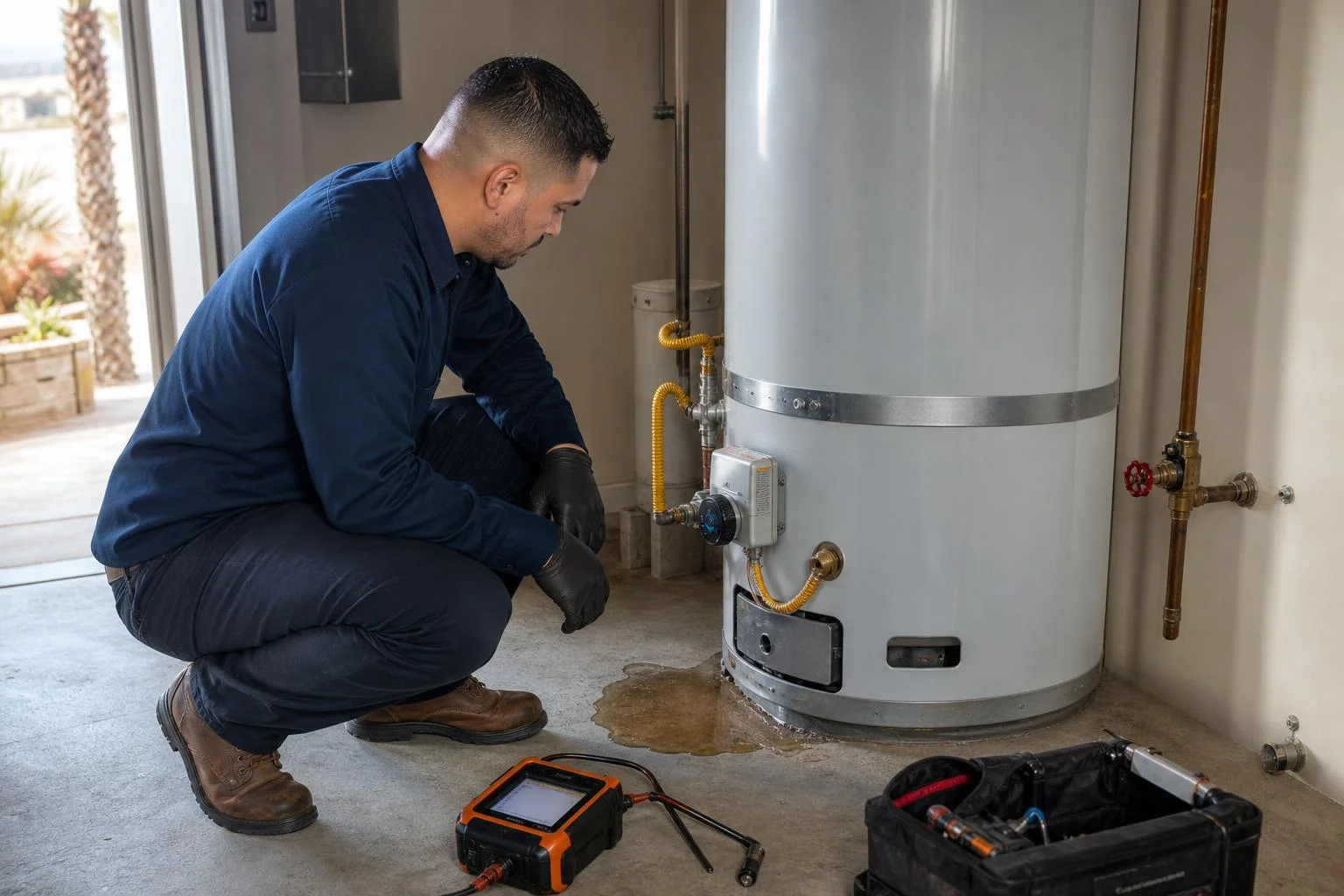


A water heater leaking from bottom is more than an inconvenience—it can quickly damage flooring, drywall, cabinets, and nearby belongings. For homeowners and business owners in Los Angeles, Orange County, Long Beach, and across Southern California, a puddle near the tank may be caused by a loose drain valve, pressure relief issue, condensation, or internal tank corrosion. Some leaks are repairable, while others signal that replacement is the safest and most cost-effective option. This guide explains how to identify where the water is coming from, what to do immediately, and when to call the experienced plumbers at A-1 Performance Rooter and Plumbing for water heater repair or installation.
Water Heater Leaking From Bottom: First Steps to Take
If you notice water beneath your heater, act promptly. Even a slow drip can become a major leak, especially when a water heater is located in a garage, closet, attic, or upstairs utility area. Before attempting any inspection, protect yourself from hot water, electrical hazards, and gas equipment.
- Turn off the power source. For an electric water heater, switch off the correct breaker at the electrical panel. For a gas unit, turn the gas control valve to the “off” position if it is safe to do so.
- Shut off the cold-water supply. The shutoff valve is usually located on the pipe entering the top of the tank. Turning it clockwise typically stops new water from entering.
- Check for active flooding. Use towels or a wet vacuum to contain water and move valuables away from the area.
- Do not touch standing water near electrical connections. Contact a professional immediately if water is near wiring, outlets, or the electrical panel.
- Call a licensed plumber. A-1 Performance Rooter and Plumbing can locate the source of the leak and recommend the appropriate repair or replacement.
If the tank is producing extremely hot water, making popping noises, or leaking heavily, avoid trying to drain it yourself. A professional inspection is the safer choice.
Common Causes of a Water Heater Leak at the Bottom
1. A Faulty Drain Valve
The drain valve sits near the bottom of the tank and is used to flush out sediment during maintenance. If the valve is loose, worn, cracked, or not fully closed, water can drip from this area. In many cases, a plumber can tighten, repair, or replace the drain valve without replacing the entire unit.
Southern California’s mineral-rich water can leave sediment inside conventional tank water heaters. Over time, that buildup can affect valves and reduce system efficiency. Annual flushing is especially valuable for properties in areas with hard water, including parts of Orange County, Riverside County, and the Inland Empire.
2. Condensation That Looks Like a Leak
Not every puddle means the tank has failed. Gas water heaters may create condensation when cold water enters a warm tank, particularly during cooler evenings or periods of heavy hot-water use. Light moisture may be normal temporarily, but consistent pooling is not. A plumber can determine whether you are seeing harmless condensation or a genuine water heater leak.
3. Temperature and Pressure Relief Valve Problems
The temperature and pressure relief valve, often called the T&P valve, is a critical safety device. It releases water when pressure or temperature inside the tank becomes dangerously high. Although this valve is normally located toward the top or side of the unit, its discharge pipe may run down toward the floor, making it appear as though the bottom of the heater is leaking.
A constantly dripping T&P valve can indicate:
- Excessive water pressure in the plumbing system
- Overheating caused by a malfunctioning thermostat
- A defective relief valve
- A missing or failed expansion tank
Never cap, plug, or block a T&P valve discharge pipe. Doing so can create a serious safety hazard. Professional water heater repair is needed to identify and correct the underlying issue.
4. Internal Tank Corrosion and Sediment Damage
When a water heater leaking from bottom is coming directly from the tank seam or beneath the outer jacket, internal corrosion is often the cause. Traditional water heaters have a steel tank lined with protective material and a sacrificial anode rod. As the anode rod wears down, corrosion can eventually attack the tank itself.
Sediment accelerates this process. Minerals settle at the bottom of the tank, creating hot spots that strain the metal and can cause rumbling or popping sounds. Once the inner tank has corroded through, it cannot be reliably repaired. Replacement is generally the best solution.
According to U.S. Department of Energy guidance, water heating accounts for roughly 18% of a home’s energy use. Replacing a failing, inefficient tank can help prevent water damage while improving reliability and potentially reducing energy waste.
How to Tell Whether You Need Water Heater Repair or Replacement
The location and severity of the leak help determine the right solution. A skilled plumber will inspect fittings, valves, supply lines, the relief valve, and the tank itself before making a recommendation.
Water heater repair may be possible when:
- The drain valve is dripping or damaged
- A supply connection is loose or worn
- The T&P valve is malfunctioning
- Condensation is mistaken for a plumbing leak
- The issue is caught early and the tank remains structurally sound
Water heater replacement is usually recommended when:
- Water is leaking from the tank body, bottom seam, or beneath the insulation
- The unit is around 8 to 12 years old or older
- Rust-colored water, recurring leaks, or corrosion are present
- The heater has frequent breakdowns or inconsistent hot-water performance
- Repair costs approach the value of a new unit
For commercial properties in Los Angeles or Long Beach, downtime can affect tenants, employees, customers, and daily operations. A-1 Performance Rooter and Plumbing can evaluate properly sized replacement options, including high-efficiency tank and tankless water heater systems, to match your property’s hot-water demands.
Preventing Bottom Leaks With Water Heater Maintenance
While no tank water heater lasts forever, routine maintenance can reduce sediment buildup and help identify developing problems sooner. This is particularly important in Southern California, where hard water conditions can be tough on fixtures, appliances, and water-heating equipment.
Use this practical maintenance checklist:
- Schedule annual tank flushing: Removing sediment helps improve heating efficiency and protects the tank bottom.
- Inspect the anode rod: A plumber can check this corrosion-fighting component and replace it before the tank is vulnerable.
- Test the T&P valve: This should be done carefully and professionally if there are concerns about age, corrosion, or discharge.
- Check the area around the heater monthly: Look for moisture, rust, unusual noises, and mineral deposits.
- Maintain proper water pressure: Excessive pressure can damage plumbing fixtures and stress your water heater.
- Consider water treatment: A water softener or filtration strategy may help reduce mineral buildup where hard water is an ongoing issue.
When to Call a Southern California Water Heater Plumber
A small drip may seem manageable, but waiting can lead to mold growth, structural damage, higher utility bills, and a sudden tank failure. If your water heater leaking from bottom continues after the water supply is shut off, or if you see rust and water emerging from the tank itself, contact a professional right away.
A-1 Performance Rooter and Plumbing provides dependable water heater repair, replacement, drain services, and general plumbing support for residential and commercial customers throughout Southern California. Our team can diagnose the issue clearly, explain your options, and complete the work with attention to safety, efficiency, and long-term performance.
Protect Your Property From Water Heater Damage
A leak at the bottom of a water heater can come from a simple valve issue, a pressure-related safety concern, or irreversible corrosion inside the tank. Shutting off the power and water supply quickly can limit damage, but an accurate diagnosis is essential before deciding on a repair. Regular flushing, anode rod inspections, and professional maintenance are smart ways to extend the life of your equipment in Southern California’s hard-water conditions. Do not wait for a minor puddle to become a costly flood. If you need fast, reliable help in Los Angeles, Orange County, Long Beach, or nearby communities, contact A-1 Performance Rooter and Plumbing today to schedule expert water heater service.