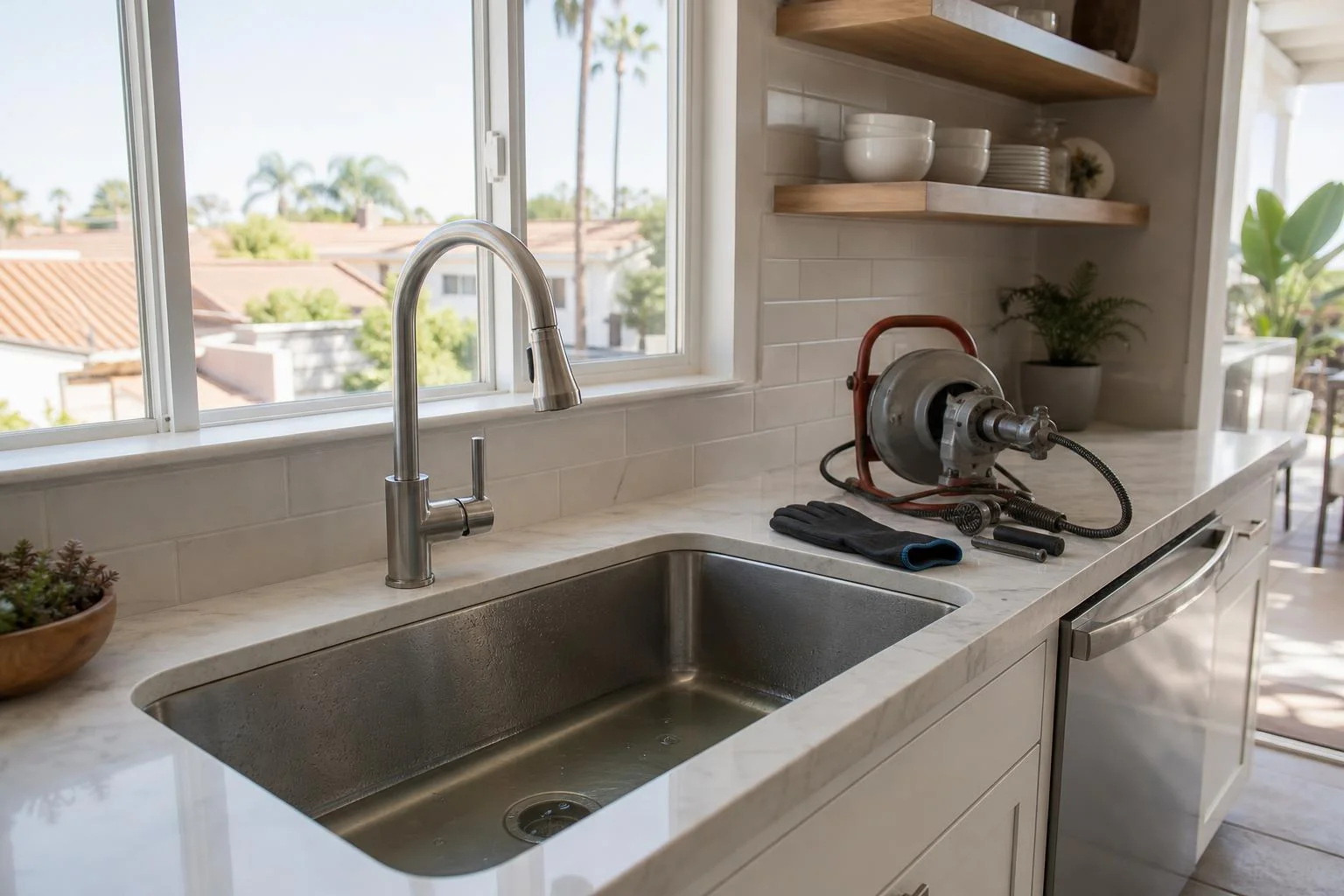


A kitchen sink that won’t drain can turn ordinary cooking and cleanup into a messy, frustrating problem. Whether water is moving slowly, pooling in one basin, or backing up into the garbage disposal, the cause is often grease buildup, food debris, soap residue, or a developing blockage farther down the drain line. In Southern California homes—from Los Angeles and Long Beach to Orange County—hard-water minerals and aging plumbing can make these clogs more frequent. This guide explains safe, practical steps to try first, when to avoid DIY drain-clearing methods, and when to call a professional plumber. With the right approach, you can protect your pipes and restore proper drainage without creating a bigger repair.
Kitchen Sink Won’t Drain: Start With These Quick Checks
If your kitchen sink won’t drain, begin by identifying whether the issue affects one fixture or several. A clog limited to the kitchen sink is usually located in the sink drain, P-trap, garbage disposal, or nearby branch line. If water also backs up in another sink, dishwasher, or floor drain, the issue may be deeper in the plumbing system or even the main sewer line.
Before doing anything else, remove standing water with a cup or small container and inspect the drain opening. Look for visible food scraps, labels, utensils, or other debris. Never put your hand into a garbage disposal unless the power is disconnected at the breaker.
1. Check the Garbage Disposal and Dishwasher Connection
A jammed or clogged garbage disposal is a common reason for a slow kitchen drain. Turn off the disposal, disconnect its power, and use the manufacturer’s reset button if needed. If the unit hums but does not spin, use the disposal wrench supplied with the unit to rotate the mechanism from underneath. Do not use your fingers, a fork, or other metal objects inside the disposal.
Also check whether the dishwasher is draining properly. Dishwasher drain hoses commonly connect to the disposal or kitchen drain pipe. When the disposal connection or air gap is blocked, dirty dishwasher water may back up into the sink.
- Run cold water before and after using the disposal.
- Only grind small amounts of approved food waste at a time.
- Keep grease, coffee grounds, pasta, rice, eggshells, and fibrous vegetables out of the disposal.
- Never pour cooking oil or bacon grease into the sink drain.
2. Use a Sink Plunger Correctly
A cup-style sink plunger can remove soft clogs caused by food particles and residue. For a double-bowl sink, seal the second drain with a wet rag or stopper so pressure is directed toward the clog. Add enough water to cover the plunger cup, place it firmly over the drain, and make 15 to 20 steady plunges. Then test the drain with hot tap water.
This method works best on shallow obstructions. If the sink drains briefly and then slows again, there may be a heavier grease clog farther down the line. Repeated plunging without improvement is a sign to stop and consider professional drain cleaning.
How to Clear a Clogged Kitchen Drain Safely
Many kitchen clogs form gradually. Fats, oils, and grease may seem liquid when warm, but they cool and stick to pipe walls. Food debris and soap residue then collect on that coating until water can no longer pass freely. This is especially common in older Los Angeles and Long Beach properties with decades-old drain pipes.
3. Clean the P-Trap Under the Sink
The curved pipe beneath the sink, called the P-trap, holds water to block sewer gases. It can also collect food debris, grease, and small objects. Place a bucket and towels beneath the trap, loosen the slip nuts by hand or with adjustable pliers, and carefully remove the trap. Empty and rinse it, then inspect the connecting pipe for buildup.
Reassemble the fittings snugly, but avoid overtightening plastic connections. Run water slowly and check for leaks. If the trap is clear but the kitchen sink won’t drain, the blockage is likely farther inside the wall drain or branch line.
4. Try Hot Water and Dish Soap for Grease Buildup
For a minor grease-related slow drain, squirt a generous amount of grease-cutting dish soap into the drain, wait several minutes, and follow with hot tap water. This can help loosen fresh grease deposits. Avoid boiling water if you have PVC drain pipes, since extreme heat can stress older plastic fittings or weaken joints.
Important: Do not rely on chemical drain cleaners. Many caustic products can damage pipes, create dangerous fumes, harm septic systems, and make later repairs more hazardous for plumbers. They are particularly risky in older homes across Orange County and Southern California, where corroded metal pipes may already be vulnerable.
When Professional Drain Cleaning Is the Best Solution
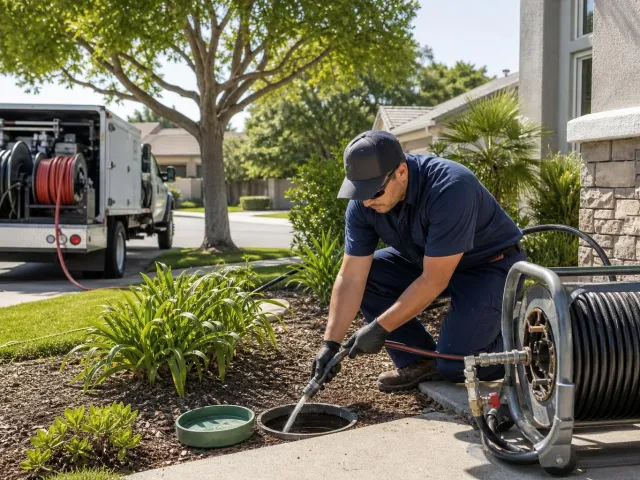
DIY methods are useful for small, accessible clogs, but they cannot always remove hardened grease, scale, roots, or obstructions deep in the line. Professional drain cleaning uses the right equipment for the pipe material and blockage type. Depending on the situation, a plumber may use a drain auger, rooter machine, hydro jetting equipment, or a sewer camera inspection.
Call a professional plumber promptly if you notice any of these warning signs:
- Water backs up repeatedly after plunging or cleaning the P-trap.
- Multiple fixtures drain slowly or make gurgling sounds.
- The kitchen sink backs up when the dishwasher runs.
- You smell sewer gas near the sink or cabinets.
- There is water leaking from pipes under the sink.
- Your drain problem returns every few weeks.
Frequent clogs may point to an issue beyond the immediate sink drain, including pipe damage, improper drain slope, invasive tree roots, or accumulated buildup in the main line. A camera inspection provides a clear view of the pipe interior and helps prevent unnecessary guesswork.
Prevent Kitchen Sink Clogs in Southern California Homes
The best way to avoid an emergency plumbing visit is to limit what enters the kitchen drain. The U.S. Environmental Protection Agency notes that fats, oils, and grease can block pipes and sewer systems when they are poured down drains. Instead, collect cooled grease in a sealed container and dispose of it in the trash.
Use these habits to keep your kitchen plumbing flowing:
- Scrape plates into the trash or compost bin before rinsing them.
- Use a sink strainer to catch food particles.
- Run cold water for 15 to 30 seconds after using the garbage disposal.
- Flush the drain weekly with hot tap water and dish soap.
- Schedule professional drain maintenance if your home has older pipes or recurring clogs.
Homeowners in areas such as Anaheim, Pasadena, Torrance, and throughout Orange County often benefit from preventive drain cleaning, particularly before holiday cooking, family gatherings, or commercial kitchen busy seasons. For restaurants and other businesses, regular drain service can reduce downtime and help prevent disruptive backups.
Frequently Asked Questions About a Slow Kitchen Drain
Why is my kitchen sink not draining but the bathroom sink is fine?
This usually means the clog is isolated to the kitchen drain, garbage disposal, P-trap, or kitchen branch line. Grease and food debris are the most common causes. If other fixtures begin backing up, the problem may involve a larger shared drain or sewer line.
Can I use baking soda and vinegar to unclog a kitchen sink?
Baking soda and vinegar may help freshen a drain or loosen very minor residue, but they are not a dependable solution for significant clogs. They will not remove heavy grease deposits, solid food blockages, or objects lodged in the pipe. Avoid combining any household remedy with chemical drain cleaner.
How do I know if my kitchen drain clog is serious?
A serious clog causes recurring backups, affects multiple fixtures, produces sewer odors, or does not improve after basic cleaning. In these cases, professional drain cleaning is the safest and most effective option.
A kitchen sink that won’t drain is often caused by everyday grease and food buildup, but recurring backups can signal a deeper plumbing concern. Start with safe steps such as checking the garbage disposal, plunging the drain, and cleaning the P-trap. Avoid harsh chemical cleaners, which can damage pipes and complicate repairs. If water continues to back up, other drains are affected, or you suspect a blockage farther down the line, A-1 Performance Rooter and Plumbing is ready to help. Our experienced Southern California plumbers provide professional drain cleaning, rooter service, camera inspections, and lasting plumbing repairs for homes and businesses. Contact A-1 Performance Rooter and Plumbing today to schedule prompt service in Los Angeles, Long Beach, Orange County, and nearby communities.