

Few plumbing problems disrupt a home or business faster than unreliable hot water. Whether you are dealing with a cold morning shower, rusty water, strange tank noises, or a puddle beneath the unit, knowing whether to schedule hot water heater repair or plan a replacement can prevent a minor issue from becoming expensive water damage. In Southern California, hard water, year-round demand, and older plumbing systems in communities from Los Angeles to Orange County can shorten a water heater’s useful life. This guide explains the warning signs, age and cost factors, and maintenance steps that help property owners make a confident decision. A-1 Performance Rooter and Plumbing provides professional diagnostics, repair, and water heater installation for residential and commercial customers.
Hot Water Heater Repair: When a Fix Makes Sense
Hot water heater repair is usually the right choice when the unit is relatively new, the tank is structurally sound, and the problem is isolated to a serviceable component. Conventional tank water heaters commonly last about 8 to 12 years, although maintenance, water quality, and usage patterns can move that range up or down. A newer unit with a failed part can often be restored safely and affordably by a licensed plumber.
Common repairable water heater issues include:
- No hot water from an electric unit: A failed heating element, thermostat, wiring connection, or reset switch may be the cause.
- Intermittent or insufficient hot water: A thermostat adjustment, sediment removal, dip tube repair, or burner service may resolve the problem.
- Pilot light or ignition problems: On gas models, issues with the thermocouple, igniter, gas control valve, or venting system require professional inspection.
- Water around fittings: A loose connection, failing temperature-pressure relief valve, or worn drain valve may be repairable if the tank itself is not leaking.
- Discolored or odorous water: Replacing the sacrificial anode rod and flushing sediment can sometimes improve water quality and extend tank life.
For example, a seven-year-old water heater in Long Beach that suddenly produces lukewarm water may only need an element replacement or burner cleaning. Replacing the entire appliance without a diagnosis can be unnecessary. A-1 Performance Rooter and Plumbing evaluates the unit’s age, fuel type, condition, safety controls, and repair cost before recommending the most practical option.
Water Heater Replacement Signs You Should Not Ignore
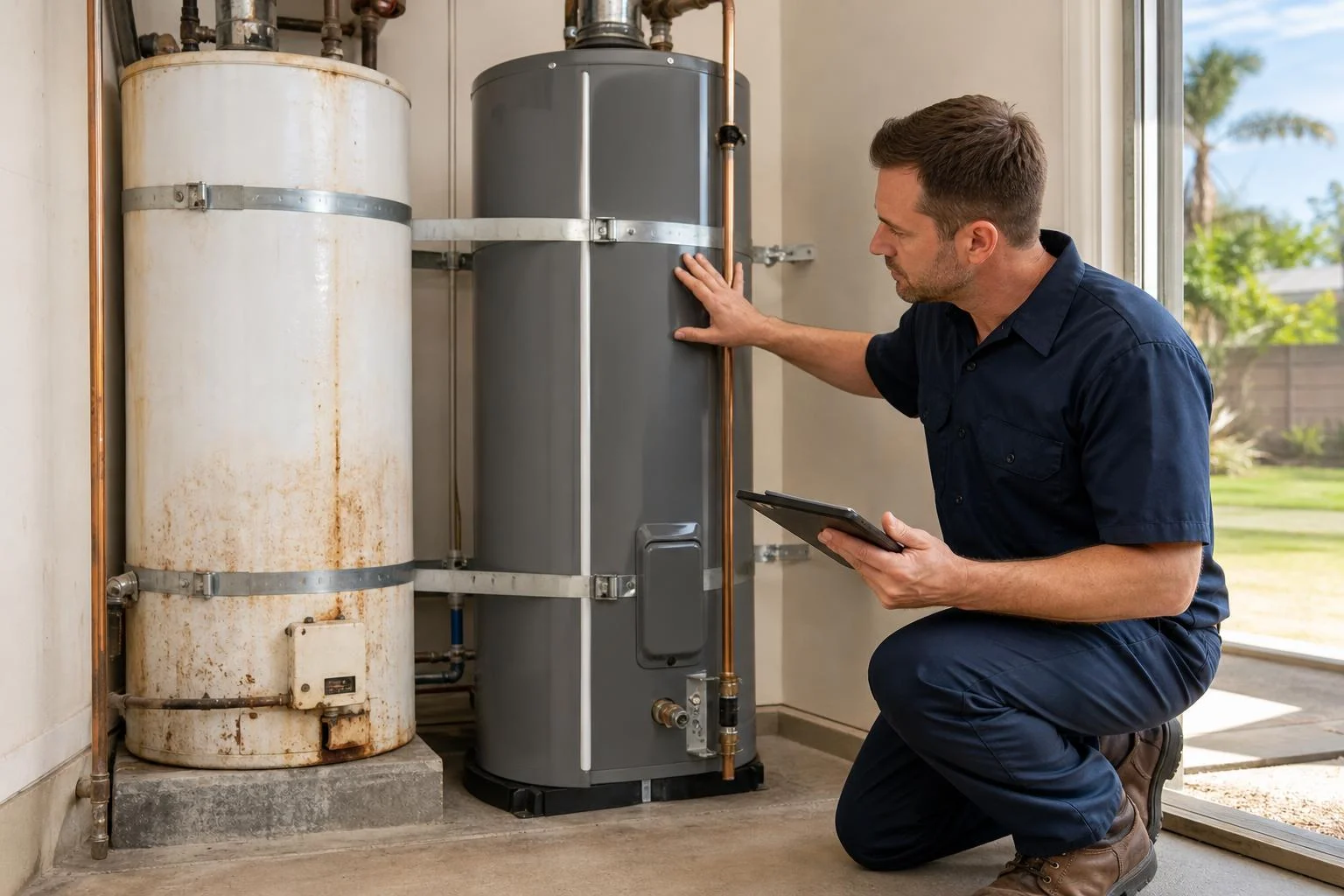
Water heater replacement is generally the smarter investment when repairs cannot address the underlying problem or when the unit is approaching the end of its expected service life. The most important distinction is where a leak originates. A leaking valve or pipe connection can often be repaired; a leak from the tank body usually means the internal lining has failed and replacement is necessary.
A Leaking Water Heater Tank Requires Prompt Action
If water is seeping from the bottom, side, or seam of the tank, turn off the water supply if it is safe to do so and contact a plumber promptly. Internal corrosion cannot be permanently repaired. Even a slow leak can damage flooring, drywall, cabinetry, and nearby electrical components. This is especially urgent in condominiums and multi-unit properties in Los Angeles and Orange County, where a failed water heater can affect neighboring units.
Age, Rust, and Repeated Breakdowns Add Up
Consider replacement when you notice one or more of these conditions:
- The unit is 10 years old or older and needs a significant repair.
- Rust appears on the tank, around the burner area, or in hot-water-only taps.
- You hear persistent popping, rumbling, or banging caused by heavy sediment buildup.
- Repairs have become frequent or the cost of repair is a substantial portion of replacement cost.
- Your household has outgrown the tank’s capacity, causing regular hot-water shortages.
- The unit is inefficient, raising energy bills despite normal hot-water use.
Hard water is a major local consideration. Mineral-rich water can leave sediment at the bottom of tank-style heaters, making the system work harder and accelerating wear. In areas such as Anaheim, Riverside, and parts of the Inland Empire, annual flushing is particularly valuable. When sediment has been accumulating for many years, however, replacement may deliver better reliability and efficiency than repeated service calls.
Repair vs. Replace: A Practical Cost and Safety Checklist
There is no single dollar amount that automatically determines whether to repair or replace a water heater. Instead, compare the immediate repair with the unit’s remaining life, performance, safety, and operating cost. A lower-cost repair on a 12-year-old tank may simply delay a replacement emergency, while a larger repair on a four-year-old unit may be entirely worthwhile.
Use this straightforward checklist before making a decision:
- Confirm the diagnosis. Do not assume every loss of hot water means the heater has failed. Gas supply issues, electrical circuit problems, cross-connections, and plumbing fixtures can create similar symptoms.
- Check the manufacture date. The serial number often includes the production month and year. A plumbing professional can help determine the age when the label is unclear.
- Identify tank leaks versus connection leaks. This is one of the most important repair-or-replace factors.
- Compare repair cost with expected remaining service life. Ask whether the repair addresses the root cause and whether other aging parts are likely to fail soon.
- Review capacity and efficiency needs. A growing family, remodeled bathroom, restaurant, salon, or commercial tenant may require a higher-recovery unit or a tankless water heater.
- Prioritize safety. Gas odors, combustion concerns, a malfunctioning relief valve, or improper venting require immediate professional attention. Never cap, plug, or disable a temperature-pressure relief valve.
For many Southern California homeowners, upgrading can also reduce standby heat loss and improve recovery time. Modern high-efficiency tank heaters and properly sized tankless water heaters can offer meaningful energy savings, but the best choice depends on household demand, gas or electrical capacity, venting, available space, and local code requirements. A professional water heater installation ensures the system is correctly sized and safely connected.
How to Extend the Life of Your Water Heater
Routine maintenance can reduce surprise failures and help you get more value from your equipment. The U.S. Department of Energy notes that water heating can account for a significant share of residential energy use, so maintaining efficiency benefits both comfort and utility costs. A licensed plumber can tailor maintenance to your water heater type and local water conditions.
Helpful maintenance practices include:
- Flush the tank annually to remove sediment, especially in hard-water areas.
- Inspect the anode rod every few years and replace it before the tank begins corroding.
- Test the temperature-pressure relief valve according to the manufacturer’s guidance.
- Keep the thermostat at a safe, energy-conscious setting, commonly around 120°F unless a professional advises otherwise.
- Check for moisture, corrosion, unusual noises, and changes in water temperature each month.
- Maintain clear space around the unit and keep gas water heater combustion air and venting unobstructed.
Do not attempt DIY gas-line work, electrical repairs, or relief-valve modifications. These systems involve scalding temperatures, pressure, fuel, and electricity. Professional water heater repair helps protect your property while ensuring repairs meet applicable California and local requirements.
Professional Water Heater Service in Southern California
Whether you need an urgent diagnosis or want to plan an upgrade before your current heater fails, professional advice can save time and prevent costly damage. A-1 Performance Rooter and Plumbing serves homeowners and businesses throughout Southern California, including Los Angeles, Long Beach, Orange County, and surrounding communities. Our team can inspect tank and tankless systems, identify leaks and performance issues, explain your repair and replacement options, and complete dependable installation work.
Fast action matters when there is no hot water, visible leaking, or a suspected gas-related problem. Addressing the issue early can protect your home, reduce downtime for your business, and help you avoid an inconvenient emergency replacement.
Choose the Right Solution Before a Small Problem Grows
The right choice between repair and replacement depends on the age of the unit, the source of the problem, repair history, efficiency, and safety. A newer heater with a failed thermostat, heating element, or valve may be an excellent candidate for hot water heater repair. An aging unit with tank corrosion, recurring failures, heavy sediment, or a tank leak is usually better replaced before it causes water damage. Regular flushing and professional inspections are especially important in Southern California’s hard-water areas. If your water heater is making noise, leaking, or failing to keep up, contact A-1 Performance Rooter and Plumbing today. Our experienced team will provide an honest assessment and reliable water heater repair or replacement solution for your Los Angeles, Long Beach, or Orange County property.